


By Jelger Groeneveld
Last updated on 12 November 2025
The election for the 11th Convocation of the Parliament of Georgia took place on Saturday 26 October 2024. It was set to be the most important election since 2012, when Georgian Dream came to power in the first democratic and peaceful transfer of power in Georgia. It could be considered the most important election since Georgia regained its independence in 1991, due to the democratic regression under Georgian Dream.
Georgian Dream claimed victory for the fourth consecutive time, in an election that was held under a fully proportional system for the first time. The election outcome was disputed by the opposition and international observers. This triggered a deep political crisis, with the opposition boycotting parliament and western partners rejecting the election result. The US and EU member states imposed targeted sanctions against Georgian Dream representatives after protests were violently suppressed with dozens of detentions.
Since Georgian Dream came to power in 2012 it took control over all state institutions, administrative resources and judicial structures. The European Union has spoken in recent years of ‘state capture’ in the service of the founder of Georgian Dream, oligarch Bidzina Ivanishvili. Contributing factors to the high stakes for this election were the repressive plans of the ruling party towards civil society and the pro-Western opposition and the pending break with the West.
According to official, but disputed results Georgian Dream received 53.9% of the vote, obtaining 89 out of 150 seats in parliament. All four main opposition contenders passed the 5% threshold and cumulatively received 37.9% of the vote, good for 61 seats in parliament. The official turnout was 60.2%, the highest since 2012. Exit polls of renowned western polling agencies, such as Edison, which predicted previous election outcomes in Georgia accurately, predicted Georgian Dream received around 41% of the vote, while the four main opposition forces would have collected more than 50% of the vote. This added to suspicions of manipulations by the authorities.
The official results came under strong scrutiny from international and domestic observers, arguing a range of violations took place such as voter intimidation, coercion, vote buying, voter carousels as well as mass violations of the voting secret. Furthermore, significant statistical deviations were strong supportive indications of these manipulations, especially in rural areas. Opposition and the public protested the outcome, while the EU and US called for independent international investigations into the violations. President Salome Zurabishvili rejected the election results as rigged, and called for new elections.
Table of contents
- 1. Political context
- 2. Timeline
- 3. Results
- 4. Election observation
- 5. Aftermath
- 5.1 Legal challenges
- 5.2 Boycott of parliament
- 5.3 Inauguration
- 5.4 Freezing EU accession: escalation of protests
- 5.5 Termination of mandates
- 5.6 Creation of pseudo-opposition
- 5.7 Legitimacy
- 5.8 Tsulukiani Commission
- 5.9 Detention of opposition leaders
- 5.10 Legal initiatives to ban parties and outlaw foreign support
- 5.11 Opposition disunity
- 6. Electoral System
- 7. Parties
- 8. Polling
- 9. Appendix
- 1. Full election summary
- 2. Elected members of Parliament
- 3. Electoral districts
- 4. Polling stations abroad
- 10. References and footnotes
1. Political context
In the years since the 2020 elections, ruling Georgian Dream has morphed its appearance from a pro-Western force into an authoritarian anti-Western power, while disrupting relations with both the United States and the European Union. Despite that, in December 2023 the country received candidate status for EU membership, which ironically fuelled Georgian Dream’s drift away from a western liberal democracy with more anti-western rhetoric, conspiracy theories and adopting repressive Russian-styled legislation regarding civil society and sexual minorities which are incompatible with EU values and norms. The adopted and announced legislation ahead of the election and the campaign rhetoric of Georgian Dream made it clear Georgia’s democracy was at stake at the ballot box.1Jelger Groeneveld, Platform Raam, 21 October 2024, In Georgië gaan de verkiezingen over de democratie zelf
Foreign agent law aka “Russian law”
Despite promises to refrain from introducing the so-called “foreign agent” law after an aborted attempt in March 2023, Georgian Dream relaunched the law in April 2024. This law, officially called the “law on transparency on foreign influence”, targets civil society and independent media and labels them as “foreign agent” if they receive more than 20% of their funding from abroad, similar to Russian legislation. Hence it was dubbed “Russian law” by opponents. Despite mass protests and strong European objections, warning the “foreign agent” legislation is not compatible with EU values and Georgia’s EU accession path, the law was adopted in May 2024 by a majority of 84 MPs from Georgian Dream and its spin-off People’s Power.2Civil Georgia, 28 May 2024, Breaking: Parliament Overrides President’s Veto on Foreign Agents Law, Adopts the Agents’ Law


The adoption triggered the US and EU to review their relations with Georgia. The EU halted Georgia’s accession process and the EU and US froze funding for government programs,3Radio Free Europe, 9 July 2024, EU Halts Georgia’s Accession, Freezes Financial Assistance4US Department of State, 31 July 2024, United States to Pause Assistance to the Government of Georgia as well as NATO exercises in Georgia.5US Department of Defense, 5 July 2024, Postponement of Exercise Noble Partner Announcement Various individual EU member states, such as Germany and Denmark, also indicated to review their relations with Georgia and the freezing of financial support of government programs.6Civil Georgia, 10 July 2024, Ambassador: Germany Stops New Financing, Pulls out from Drills, Keeps Student Visas7Civil Georgia, 30 July 2024, Denmark Fully Reviews Aid to Georgia, “Will Suspend Some Planned Activities and New Programming Support”
The Georgian government announced on 30 July it would be ready to enact the law beginning 1 August 2024, after which date applicable organizations would be required to register as foreign agent. Failing to do so could result in fines of 25,000 Georgian lari (~€ 8500 or US$ 9200) and forced registration by the authorities.8Civil Georgia, 30 July 2024, Justice Minister Decrees Financial Reporting Department to Implement the Agents’ Law The announcement of the enactment was followed by the US and Denmark to freeze aid programs with the Georgian government. Hundreds of Georgian civil society organizations announced earlier they won’t register voluntarily.
On top of the regressive “foreign agent” legislation, Georgian Dream adopted a package of anti-LGBTI legislation under the name of “protection of family values” ahead of the elections, which bans so-called “LGBTI-propaganda” and gatherings, bans the adoption of children by same-sex couples, bans transgender rights, and puts a ban on changing gender in official documents.9Civil Georgia, 17 September 2024, Parliament Adopts Anti-LGBT Legislation in Third Hearing
Georgian Charter
On Independence Day 26 May, president Salome Zurabishvili announced the “Georgian Charter”, a roadmap for resolving the political crisis and returning to the path of EU integration.10Civil Georgia, 26 May 2024, Georgian Charter: President Proposes Unified Goals for Short-Term Parliament, Technical Government The charter proposed a non-partisan technical government to be formed after the elections on 26 October, which would withdraw and abolish any law that damages the European path, such as the “foreign agent law”, the (tax) law on repatriation of offshore assets, the law on surveillance, and several other laws.
Also, reforms that are required to proceed towards opening the EU accession negotiations would have to be implemented. Upon completion, the technical government would schedule early elections in autumn 2025. A week after the announcement of the Georgian Charter, 17 opposition parties and 5 independent opposition MPs signed it.11Civil Georgia, 3 June 2024, Opposition Parties Sign Georgian Charter On 23 September 2024, Gakharia’s For Georgia joined the Charter.12Civil Georgia, 23 September 2024, Gakharia – For Georgia Signs President’s “Georgian Charter”
2. Timeline
The timeline of political and party updates in the five months leading up to the election day is stored in a separate page.
3. Results
The finalized protocol of the election results was signed on 16 November 2024. The table below shows the official results released by the Central Election Commission (CESKO), ordered by number of votes (full table in Appendix 1). Georgian Dream was declared the winner with 53.93% of the votes, good for 89 of the 150 seats in parliament. The turnout was established at 60.2%. While according to the official results, the ruling Georgian Dream was the clear winner domestically, the vote abroad showed a different picture.
There were a total of 34,296 valid votes abroad, of which only 13.5% was for the ruling Georgian Dream at the fourth place. Winner in the vote abroad was Coalition for Change (33.3%), followed by UNM (19.9%), Strong Georgia (14.9%) and For Georgia (9.0%). The average turnout in the 67 precincts abroad was 36.0%, double compared to 2020.
| Party | Votes | % | +/- | Seats | +/- | |
|---|---|---|---|---|---|---|
| Georgian Dream | 1,120,053 | 53.93 | +5.71 | 89 | -1 | |
| Coalition for Change | 229,161 | 11.03 | +11.03 | 19 | +19 | |
| Unity-National Movement | 211,216 | 10.17 | -23.95 | 16 | -29 | 13The +/- calculation is based on the common result of UNM, European Georgia and Strategy Builder in 2020. |
| Strong Georgia | 182,922 | 8.81 | +4.33 | 14 | +8 | 14The +/- calculation is based on the common result of Lelo and Citizens in 2020. |
| Gakharia for Georgia | 161,521 | 7.78 | +7.78 | 12 | +12 | 15The party had six MPs in parliament since 2021, when they split from Georgian Dream. |
| Girchi – New Political Center | 62,223 | 3.00 | +0.11 | 0 | -4 | |
| Alliance of Patriots | 50,599 | 2.44 | -0.70 | 0 | -4 | |
| Georgian Labour Party | 15,103 | 0.73 | -0.27 | 0 | -1 | |
| Other parties | 43,981 | 2.11 | 0 | 0 | 16Ten other parties on the ballot received a total of 43,981 votes (or 2.1%). | |
| Total | 2,076,779 | 98.34 | 150 | 17CESKO reported a total of 2,111,834 votes. The actual sum of the reported votes and invalid votes as released by CESKO is 2,111,753, thus 81 votes short of the reported total turnout. | ||
| Invalid votes18This is the number on the official protocol of 16 November 2024. The sum of the invalid ballot count as stated on the 73 district protocols and the 67 protocols from abroad is 34,976. This excludes 1,643 votes declared invalid from precinct 22.69 (Marneuli). | 34,974 | 1.66 | ||||
| Total cast votes19There is a discrepancy of 81 between the sum of the above numbers of the protocol and the reported grand total. | 2,111,834 | 100.00 | ||||
| Registered voters and turnout | 3,508,294 | 60.2 | ||||
| Sources: CESKO,20CESKO, Dashboard election results Final protocol and elected MPs.21CESKO, Summary Protocol Of the Final Results of the 26 October 2024 Parliamentary Elections of Georgia (pdf)22CESKO, Minutes summarizing the voting results of election precincts established in another state (pdf) | ||||||
3.1 Exit polls
The various exit polls order by pro-government and opposition leaning media showed divergent pictures of the election outcome – as happened in 2020 – especially regarding the performance of the ruling party Georgian Dream. The exit poll conducted by GORBI for pro-government Imedi TV claimed Georgian Dream was in the lead with 56% of the vote, followed by Coalition for Georgia as second (12.2%), then UNM (11.6%), Strong Georgia (7.0%) and For Georgia at 4.8%, not enough to pass the threshold.
Exit polls for opposition leaning channels conducted by HarrisX (for Mtavari Arkhi) and Edison (for Formula TV) showed 41-42% for Georgian Dream, with a combined majority of 52% for the four main opposition parties.23Civil Georgia, 26 October 2024, Exit Polls Show Conflicting Results as Polls Close According to Edison both Coalition for Change and UNM would have gotten 16.7%, Strong Georgia 10.3% and For Georgia 8.2%. This would be enough for the four opposition forces to form a parliamentary majority of 83 seats, while Georgian Dream would get 67 seats with this result.24Edison, 26 October 2024, Edison Research Exit Poll projects clear victory for opposition parties in Republic of Georgia Parliamentary Elections The opposition and ruling party claimed victory based on the respective exit polls.25Civil Georgia, 26 October 2024, GD, Opposition Both Celebrate Victory
Later in the evening of 26 October, the preliminary official results came in based on the electronically counted ballots, showing Georgian Dream received 53% of the vote share.26Civil Georgia, 26 October 2024, Official Preliminary Results: Georgian Dream Leads with 52.99% The major discrepancy between the official count and both Edison and HarrisX exit polls added to concerns of election manipulation. Edison exit polls held during Georgian elections since 2012 predicted the outcome accurately within the margin of error.
Edison marked the large (and for them unusual) discrepancy between their exit poll and the official results, noting in a statement this suggests vote manipulation: “The 13-point difference between Edison’s estimate and the official result of 54% for Georgian Dream cannot be explained by normal variation alone and suggests local-level manipulation of the vote”. Edison reviewed their data and found that the “deviation from statistically expected results was widespread but most pronounced at specific polling locations in rural areas. These locations are likely to have had the most significant vote manipulation at the polling location level”.27Edison, 1 November 2024, Edison Research 2024 Republic of Georgia Exit Poll Edison also noted that their 12 representative surveys in Georgia throughout 2023 and 2024 suggested Georgian Dream would under-perform their 2020 vote by 10 percent, but instead exceeded it with 6 percent.
HarrisX re-weighed their initial exit poll, corrected for the final turnout numbers as well as age and gender balance. This correction gave Georgian Dream a slight advantage (44.4%, compared to the initial 42%), but the large disparity with the official results remained. HarrisX did the survey in 27 different districts throughout Georgia, covering 125 polling stations with a recorded response from 12,007 voters. In a further analysis of all data, including the official data, revealed “statistically unexplainable data discrepancies” between their exit poll results and official results, which “cannot be explained by statistical variance, suggesting potential voting irregularities”.28HarrisX, 31 October 2024, BREAKING: HarrisX Releases Final Georgia 2024 Exit Poll Analysis
3.2 Turnout
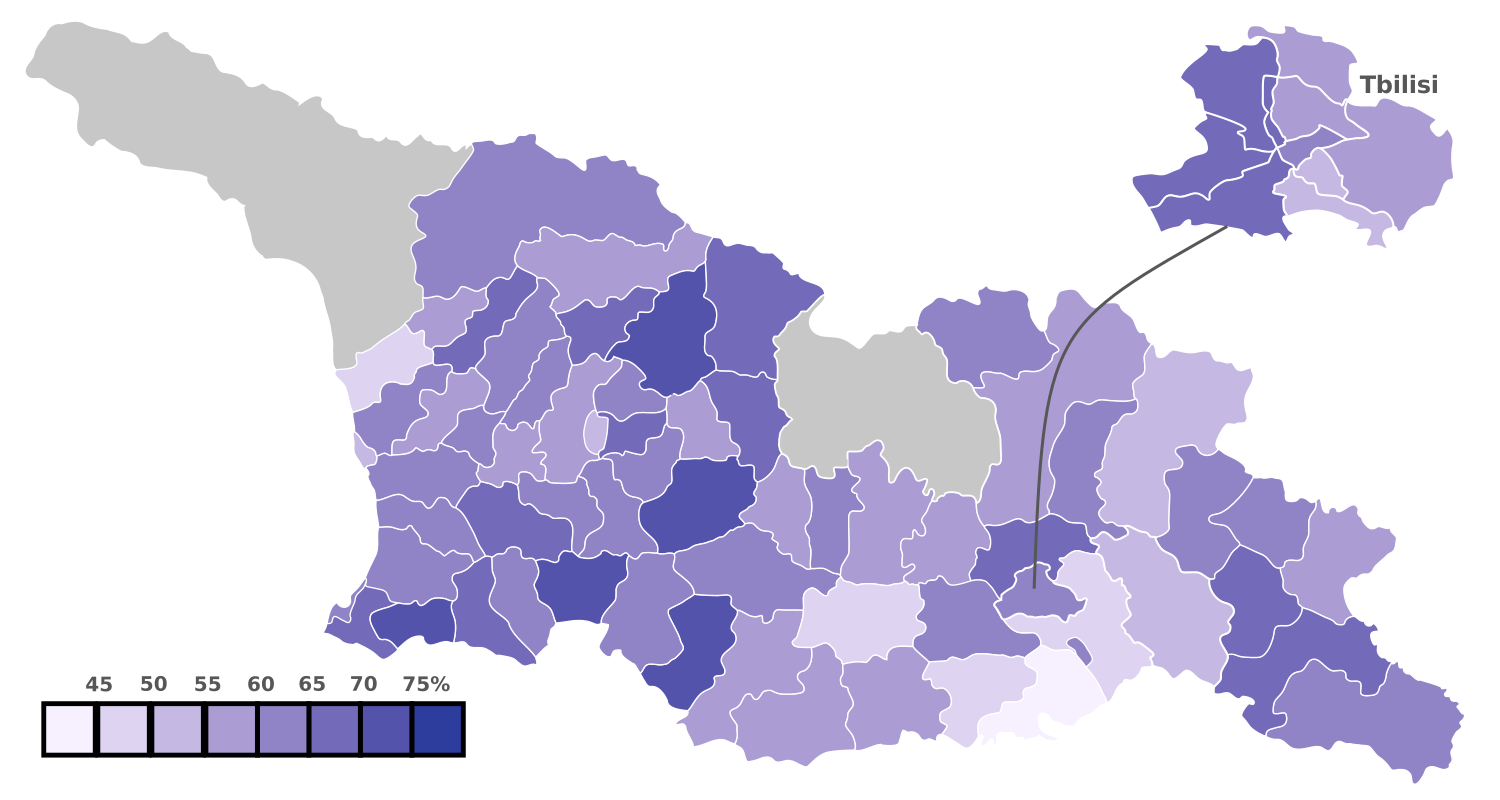
The nationwide turnout was initially established at 58.9%, nearly three percent higher than the previous elections in 2020, but slightly lower than the 2012 elections which brought Georgian Dream to power.29Civil Georgia, 26 October 2024, Polls Close with 58,94% Turnout. According to the final protocol the turnout was 60.2%. Per election district the turnout varied between 43.7 and 76.1%, with the highest turnout in the western part of the country.

3.3 Regional distribution
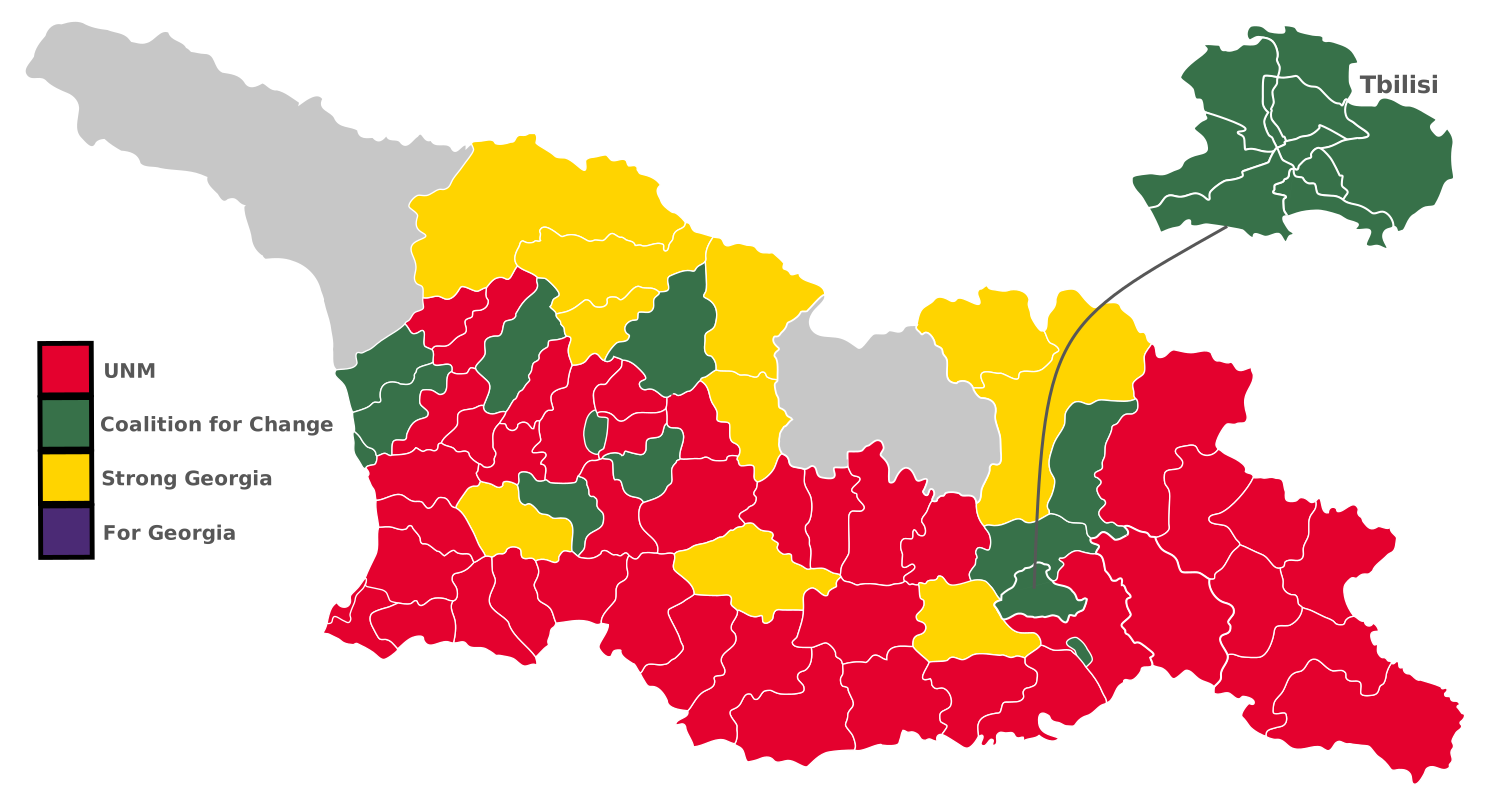
While Georgian Dream was by far the largest party in every election district, the support for the individual opposition parties varied in the regions. Overall, Coalition for Change finished as second, but that was mostly carried by capital Tbilisi and major cities like Rustavi, Kutaisi and Poti. In most election districts, UNM received the 2nd largest vote share. In Tbilisi, Strong Georgia was the third largest, followed by For Georgia, while UNM was the least supported of the main opposition parties in the capital.
The vote for Georgian Dream per election district varied between 38% in Vake (Tbilisi) to 88% in Akhalkalaki and Ninotsminda in the southern Samtskhe-Javakheti region. Also in Ivanishvili’s home district Sachkhere, support for Georgian Dream was excessively high at 84%. The party’s support was the lowest in the big cities, Tbilisi (42%), Rustavi (41%), Kutaisi (47%) and Batumi (49%). The extremely high support for Georgian Dream in some regions, far above the national average of 54% in the official results, added to suspicions of manipulations in those areas. In various local precincts in these areas the official results showed up to 98% votes for GD.
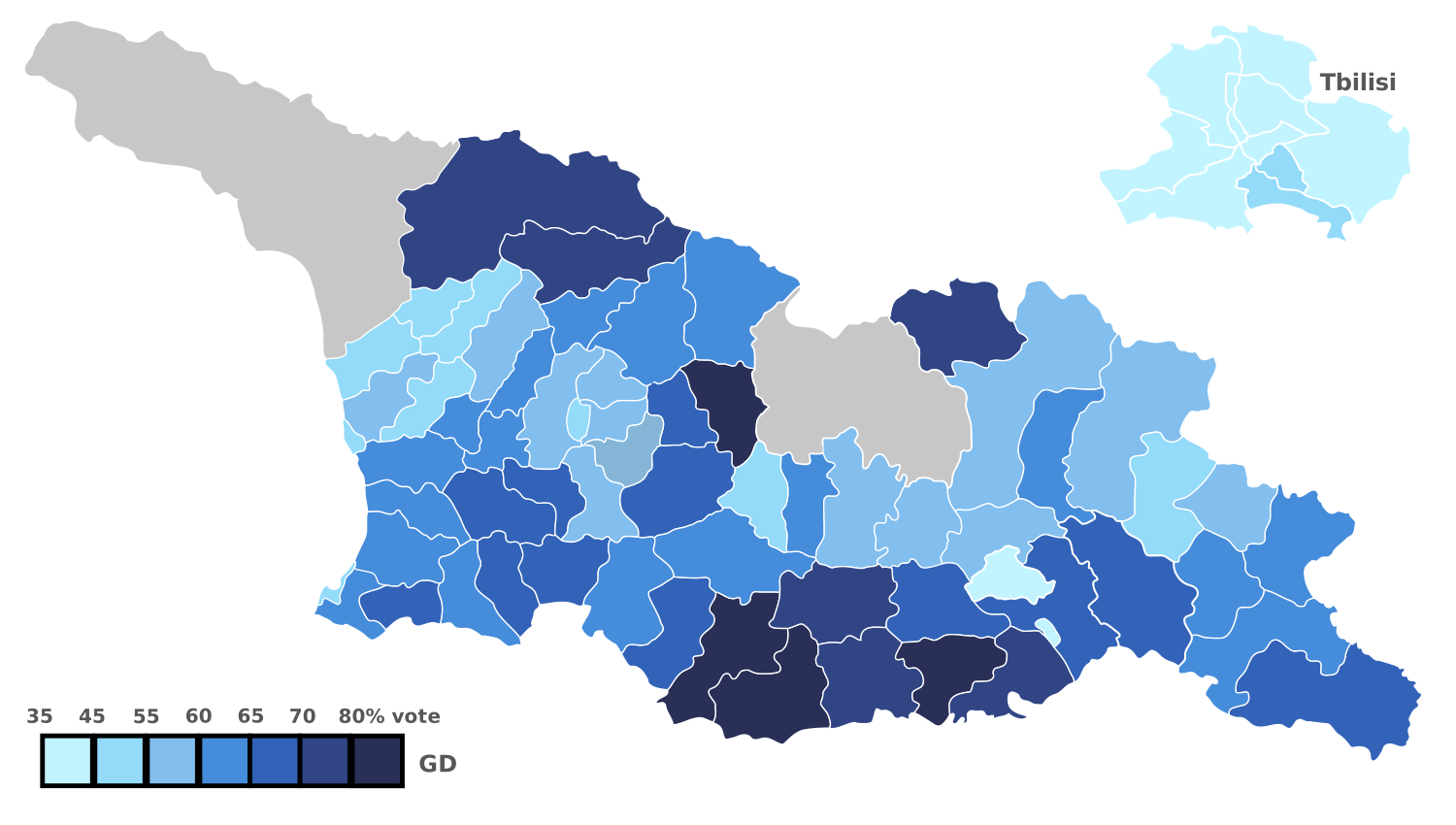
UNM had relatively strong support in Kakheti, Adjara and parts of Samegrelo. Strong Georgia had their best scores in Tbilisi, but was simply overtaken by Coalition for Change. But it also had relatively good performance in the sparsely populated mountain regions. Gakharia for Georgia did not manage to finish second in any district, but it had double digit scores in the cities Tbilisi, Batumi, Rustavi, and most of the Samegrelo region.
3.4 Votes abroad
The diaspora turnout was 36.0 percent. The 34.530 voters abroad voted in large majority for the main pro-western opposition groups (78.9%), while Georgian Dream received only 11.5% abroad.
4. Election observation
The Georgian government invited the OSCE ODIHR for an election observation mission. After a Needs Assessment Mission (NAM) performed in May 2024, the ODIHR recommended to send 28 long term observers (LTO) for a prolonged pre-election observation and 350 short term observers (STO) for election day. Georgian civil society organizations informed the NAM mission about the negative impact of the “foreign agent” law on the observation missions that CSOs are legally allowed to perform.30OSCE ODIHR, 24 June 2024, Needs Assessment Mission Report 20-24 May 2024 (pdf) According to the CSOs, the “foreign agent” law will result in labelling CSOs as “representing the interests of foreign powers” and create an atmosphere of mistrust and hostility, which will negatively impact their ability to operate and to deploy observation activities.
Starting 19 July 2024, the International Republican Institute (IRI) deployed 20 long term observers, “to cover municipalities and electoral districts across the country”.31IRI, 18 July 2024, Observation Mission Ahead of Georgia’s Parliamentary Elections The National Democratic Institute (NDI) arrived in the week of 22 July 2024 in Tbilisi with a long term mission of five plus additional Georgia based staff.32Civil Georgia, 24 July 2024, NDI, IRI Launch Long-term Election Observation Missions
5. Aftermath
Shortly after the election results were released, the opposition organized protests in Tbilisi.33France24, 28 October 2024, Protests erupt in Georgia after contested vote as Hungary’s Orban visits A string of marches throughout the city took place, while mass protests were organized on a frequent basis at parliament well into November.34Radio Free Europe, 4 November 2024, Thousands Protest Georgia’s ‘Stolen Election’ In Tbilisi35Associated Press, 12 November 2024, Thousands rally outside Georgian parliament to demand a new election towards European integration Election watchdogs and opposition parties submitted legal cases at the courts to challenge the election results. Immediately after the elections, opposition and civil society gathered evidence of manipulations to corroborate their claims. They also performed PVT (Parallel Vote Tabulation) on election night to secure data from the local precincts.


5.1 Legal challenges
The largest legal case was the breach of vote secrecy due to the way the ballot had to be submitted into the electronic counting machine (the scanner). This in combination with strong markers used for the vote on the ballot, caused the dot to be pressed through to the back side of the ballot, allowing for any witness to guess the vote. Since precinct election commission members were assisting voters with the submission of the ballot in the scanner, the vote was exposed to them in many cases, which was reported by international and local observers.
The election watchdog “My Vote” tried to have all election results of the precincts with this electronic technology to be annulled, effectively rendering the elections as a whole invalid. Both Kutaisi and Tbilisi Courts of Appeal did not agree with this.36Civil Georgia, 7 November 2024, Tbilisi Court of Appeals Rejects Alleged Breach of Ballot Secrecy, Upholding Official Results The Tetritskaro district court ruled the results of 30 precincts to be annulled, creating hope among the opposition, but the decision was overruled by the higher Tbilisi court.37Ibid. President Zurbaishvili appealed to the Constitutional Court, challenging the constitutionality of the elections, based on violation of the principles of vote secrecy and universal suffrage.38Civil Georgia, 17 November 2024, President Zurabishvili Challenges the Constitutionality of Elections in Court The court rejected the demand to cancel the election results two weeks later.39Civil Georgia, 3 December 2024, Breaking: Constitutional Court Rejects Appeals by President and Opposition MPs


While the protests were ongoing, the opposition gathered further evidence of the election manipulations, and experts analyzed the data and determined major deviations within the statistical curves, such as high turnouts in combination with excessively high amount of Georgian Dream votes of more than 90% in precincts in rural districts.
5.2 Boycott of parliament
The opposition parties decided to boycott parliament, to have their mandates terminated and withdraw their party lists from the registration. The latter would prevent party-list candidates to be acknowledged as MP once the mandates from the elected MPs would be terminated. In this way, these parliament seats would remain empty. Opposition coalitions Unity, Coalition for Change and Strong Georgia officially applied for termination of their parliamentary mandates in mid-November.40Civil Georgia, 12 November 2024, Coalition for Change, Unity-UNM Officially Renounce Their MP Mandates41Civil Georgia, 15 November 2024, Strong Georgia Renounces MP Mandates The parties also committed to withdraw their party lists at the end of November, a day after the inauguration of parliament.42Civil Georgia, 26 November 2024, Unity-UNM Appeals to CEC to Revoke its Party List Gakharia for Georgia said they would boycott parliament, but would chose their own moment to decide on formal termination of parliamentary powers and annulment of the party-list.43IPN, 26 November 2024, Giorgi Gakharia: No one will pressure us to cancel the lists – we will not ask either the National Movement or Ivanishvili and his party, we will leave the mandates when and in such a form as we deem necessary
After Christmas recess, Chairman of the Committee on Procedural Issues and Rules of Parliament Davit Makitashvili said he could not specify whether the termination of opposition mandates as requested will be on the agenda at the opening of the Spring session of parliament. According to him “parliament will discuss the aforementioned issue when it deems it necessary”,44IPN, 14 January 2025დავით მათიკაშვილი – ოპოზიციონერი დეპუტატებისთვის მანდატის შეწყვეტის საკითხზე პარლამენტი მაშინ იმსჯელებს, როცა საჭიროდ ჩათვლის suggesting the ruling power would keep this floating in the air as bargaining chip with the opposition. Also, delaying the removal of the opposition from parliament – even upon their own free will – could serve as proof to the international arena Georgian Dream does not actively seek a one-party parliament. The legislation on termination of mandates stipulates however that the request should be concluded within 15 days by the procedural committee and the request should be put on the agenda for the first plenary session after that. This suggests the procedure has been violated in this case.
5.3 Inauguration of Parliament
On 16 November 2024, the central election commission CESKO signed the final protocols, making the results definite. This also triggered the legal deadline for the inaugural session of the new parliament, to be called by the president and to be performed within 10 days. President Zurabishvili refused to call this session as she denounced the election results as rigged, which in her opinion undermined the legitimacy of parliament. She also had two cases pending at the Constitutional Court, effectively demanding the election results to be cancelled.
Georgian Dream leaders ignored this and the lack of the presidential call for the opening session. They went ahead with convening parliament anyways on Monday 25 November. The 88 Georgian Dream MPs present rubber stamped all 150 mandates of the elected MPs, including those of the opposition, which boycotted the session. According to Georgian constitutional experts this session was in violation of the constitution, calling the parliament illegal. Incumbent Shalva Papuashvili was extended as parliament speaker and chair.
Also, Georgian Dream called the presidential election for 14 December 2024 with an inauguration date on 29 December 2024. This was against legal procedures and timespans. On 27 November 2024, Bidzina Ivanishvili presented Mikheil Kavelashvili as presidential nominee, a former soccer player and an MP elected on the list of Georgian Dream, but part of the radical anti-western, ultra-conservative People Power party, a proxy spin-off from Georgian Dream. On 28 November 2024 the self-inaugurated parliament agreed to the cabinet led by incumbent prime minister Irakli Kobakhidze.
With the above steps, Georgian Dream effectively performed an unconstitutional power grab, a coup.
5.4 Freezing EU accession: escalation of protests
On 28 November 2024, after a European Parliament resolution denouncing the Georgian elections and calling for new elections to take place, PM Kobakhidze said the Georgian government would freeze the EU accession process until the end of 2028 and would refuse and EU assistance until that time. Shortly after the election, the EU had already said to freeze funding and the accession process for the time being, until Georgia would revert legislation that stood in the way, such as the so-called “foreign agent” law. Immediately after Kobakhidzes announcement, spontaneous protests broke out throughout Georgia, lasting for months.
Thousands civil servants throughout many government institutions denounced the step in open letters as anti-constitutional, followed by dozens of large businesses who said this would harm the business climate and Georgia’s national interests. The protests were repeatedly violently repressed, leading to hundreds arrested and dozens injured, including journalists. The police repression was accompanied with so-called ‘titushki’ gangs beating up protesters in vulnerable spots.
On 10 December 2024, eight Georgian Dream MPs had their mandates terminated. Honorary chair Bidzina Ivanishvili and party chair Irakli Gharibashvili relinquished their mandates, stating their party functions, while Mikheil Kavelashvili had to give up his mandate as presidential nominee. The other five MPs became member of the cabinet: Prime Minister Irakli Kobakhidze, Minister of Foreign Affairs Maka Bochorishvili, Minister of Justice Anri Okhanashvili, Minister of Environmental Protection and Agriculture Davit Songulashvili and Deputy Minister of Economy and Sustainable Development Mariam Kvrivishvili.45IPN, 10 December 2024, ბიძინა ივანიშვილს, ირაკლი ღარიბაშვილს, მიხეილ ყაველაშვილს, ირაკლი კობახიძეს, მაკა ბოჭორიშვილს, ანრი ოხანაშვილს, დავით სონღულაშვილსა და მარიამ ქვრივიშვილს დეპუტატის უფლებამოსილება შეუწყდათ
On the same day, the mandates eight new MPs from the Georgian Dream party list were confirmed by parliament. The eight were the next ones on the party list: Levan Machavariani, Archil Gorduladze, Salome Jinjolava, Tornike Berekashvili, Tornike Cheishvili, Paata Salia, Giorgi Guguchia, Irakli Cheishvili.46Netgazeti, 10 December 2024, პაატა სალია, არჩილ გორდულაძე და სხვები – „ოცნებამ“ 8 ახალი დეპუტატის უფლებამოსილება ცნო Salome Kurasbediani, number 92 on the list and third next one, was skipped for unknown reasons. Likely she declined. Newly recognized MP Paata Salia is co-owner of the Rustavi2 channel and whas its director. Under his directorship the channel turned into a government friendly station after the lengthy legal ownership battle in the years 2015-2019.47Radio Free Europe RFE/RL, 22 August 2019, More Rustavi-2 TV Journalists Quit After New Owner Fires Colleagues Of the newly recognized MPs, only Levan Machavariani was an MP in the previous term, since April 2024.
5.5 Termination of Mandates
On 5 February 2025, the Committee on Procedural Issues and Rules of the parliament supported the termination requests of the mandates of all 49 MPs of Unity, Coalition for Change and Strong Georgia, which they officially requested in November 2024.48IPN, 5 February 2025, Committee on Procedural Issues supports termination of parliamentary mandates of 49 MPs A few hours later all 49 mandates were officially terminated by the plenary session of parliament,49IPN, 5 February 2025, 49 ოპოზიციონერ დეპუტატს სადეპუტატო უფლებამოსილება შეუწყდა – 150-წევრიანი პარლამენტი 101-წევრიანი გახდა resulting in a 101-member parliament.
Girchi-More Freedom
On 3 April 2025, three members of Girchi-More Freedom, Tsotne Koberidze, Boris Kurua and Badri Grigalashvili, announced they would leave the party. Koberidze and Kurua were co-founders of the party and were elected in parliament via the Coalition for Change party list, while Grigalashvili stood electable on #24. They cited the “need for change”.50Radio Tavisupleba RFE/RL, 3 April 2025, ცოტნე კობერიძემ და ბორის (ჩელე) ყურუამ ზურა ჯაფარიძის „გირჩი – მეტი თავისუფლება“ დატოვეს51IPN, 3 April 2025, Badri Grigalashvili is also leaving the party “Girchi – More Freedom” Koberidze said the party made many mistakes. “I think that what we are doing is nothing new – everything is the same. I don’t believe that change can be achieved by staying the same”.
Criticizing the role of Salome Zurabishvili, Koberidze said he does “not believe in the victory formula whose main weapon is Salome Zurabishvili – the president brought in by Bidzina Ivanishvili with the worst elections”. With that he referred to the 2018 presidential election when Zurabishvili, as independent, was supported by Georgian Dream. For the first time a 2nd round was required in a Georgian presidential election. It is alleged the 2nd round was only narrowly won by Zurabishvili through manipulations of the outcome.
Gakharia for Georgia
Since February 2025, Georgian Dream leaders insisted “it would be the best option for the rehabilitation of our democratic system for [“Gakharia for Georgia”] and the last representatives of the “National Movement” to lose their mandates in the Georgian parliament – there is no place for any foreign agent in the Georgian parliament.“52IPN, 6 February 2025, Irakli Kobakhidze: The best option would be for Gakharia’s party and the last representatives of the “National Movement” to lose their mandates – there is no place for any foreign agent in the parliament At the end of May 2025, Georgian Dream faction leader Mdinaradze hinted the termination of Gakharia’s mandates was looming.53OC Media, 29 May 2025, Georgian Dream will revoke the mandates of Gakharia’s MPs from the opposition For Georgia party
Four weeks later, on 26 June 2025, the parliamentary Committee on Procedural Issues and Rules announced they would prepare the termination of all twelve mandates of Gakharia For Georgia, on the grounds of “unjustified absence from sessions”.54IPN, 30 June 2025, Parliamentary Committee on Procedural Issues and Rules to discuss early termination of powers of members of Gakharia for Georgia party on June 30 Deputy chair or parliament Nino Tsilosani denied the aim was to lift immunity for persecution in absentia, while Gakharia remained abroad. She said Gakharia for Georgia deliberately did this themselves by staying away.55IPN, 26 June 2025, Nino Tsilosani – Giorgi Gakharia and his party members are deliberately revoking immunity and mandate On 2 July 2025, parliament terminated the mandates of all twelve MPs of Gakharia For Georgia.56Civil Georgia, 2 July 2025, Georgian Dream Parliament Terminates 12 Gakharia Party Mandates The party was also stripped of state funding for the next six months starting with the beginning of the autumn session, as penalty for their absence in the previous session.
As the party didn’t have their list cancelled, the next twelve on the list can be appointed, unless they personally revoke their right. This would create an opportunity for Georgian Dream to coerce the replacements on the list into joining their ranks or at least to participate in the parliamentary process (ie, not boycott) and thus become part of legitimizing the “multi-party” parliament.
At the end of summer recess, parliament announced the recognition of the parliamentary mandates of twelve replacements of Gakharia for Georgia would be on the agenda during the first plenary session of the autumn session.57IPN, 28 August 2025, Parliament to decide next week on recognizing the powers of replacement deputies for 12 terminated members of the “Gakharia for Georgia” party Given the announcement of the twelve replacements by name, it is known Elguja Khokrishvili (#17), Kakha Nuralidze (#19), Vakhtang Pachulia (#26) and Erekle Dumbadze (#27) renounced their right to their mandate (see Appendix 2, second table replacements). The mandates of the replacements were recognized by parliament on 2 September 2025.
A week later, Imedi TV claimed eight of these new MPs appealed to parliament chair Papuashvili to allow them to enter parliament after they ceased activities incompatible with being an MP. In a statement in response, leader Giorgi Gakharia said the party remains “committed to a political boycott!” and that “the situation regarding mandates, which has already been discussed many times, has not changed!”58Radio Tavisupleba, 9 September 2025, გახარიას პარტიაში აცხადებენ, რომ “პოლიტიკური ბოიკოტის რეჟიმში რჩებიან”
On 20 October 2025, two weeks after the disastrous local elections, the replacement MP Giorgi Sharashidze made a statement announcing the twelve MPs would stop the party’s boycott and resume parliamentary work. He defended the step by saying the collective opposition boycott of a year failed to achieve its goals and that the boycott and abolition of parliamentary mandates was a mistake, that “led to the current situation”.59IPN, 20 October 2025, Gakharia for Georgia party stops boycott, enters parliament
Sharashidze: ”Unfortunately, we must admit that this form of political protest could not stop the evil machine of the Dream and could not prevent damaging decisions for the country by the de facto government, such as suspending Georgia’s European integration process, adopting anti-democratic and human rights-violating laws, strengthening the autocratic regime, violence against peaceful citizens, stealing free and fair elections, and many other criminal, anti-national, and anti-state actions.”
On Monday 27 October 2025, freshly appointed MP Rusudan Tevzadze for Gakharia for Georgia announced her resignation from her parliamentary mandate and leaving the party. Tevzadze was member of the political council of the party since the beginning in 2021. She explicitly stated her decision is not against the party, but for the future of the country.60IPN, 27 October 2025, Rusudan Tevzadze announces she is renouncing her parliamentary mandate and leaving the “Gakharia for Georgia” party
5.6 Creation of pseudo-opposition
On 13 December 2024, People’s Power MP Guram Macharashvili announced the party would leave the parliamentary majority of Georgian Dream to go into “opposition”. With this step the party would “lay the foundation for the existence of a healthy opposition in Georgia”, Macharashvili said.61IPN, 13 December 2024, People’s Power leaves the parliamentary majority and joins the opposition This is in line with the rhetoric and the election promise of Georgian Dream to cleanse the opposition by banning “UNM and its satellites” in order to create a “healthy democratic system”.62Imedi, 20 August 2024, Ruling Georgian Dream party clarifies why it needs to secure constitutional majority in upcoming parliamentary elections People’s Power leader Sozar Subari was appointed deputy speaker of Parliament on behalf of the “parliamentary minority”, the opposition.
In this way People’s Power acts as the radical yet accepted pseudo-opposition, similarly to Russia’s managed political playing field, in which serious challengers have been outcast or banned. Georgian Dream has envisioned such a system in its election campaign. Since the pro-Western opposition parties decided to terminate their parliamentary mandates, the parliament was effectively left without an opposition. Installing People’s Power as pseudo-opposition was a transparent attempt by Georgian Dream to remove the image of a “one-party parliament”.
Obviously this was just window dressing. Notably, presidential candidate Mikheil Kavelashvili, a founding member of People’s Power, was nominated by Georgian Dream in November 2024, which only contributed to the shambolic creation of a “healthy opposition”. On top of that, People’s Power MP Irakli Beraia was appointed deputy minister of Justice in January 2025 and took place in the government.63IPN, 13 January 2025, Irakli Beraia has been appointed as Deputy Minister of Justice This was short lived, as Beraia was appointed head of the Investigative Service of the Ministry of Finance a few months later during a minor cabinet reshuffle.64Civil Georgia, 3 April 2025, Irakli Beraia Appointed as Head of Finance Ministry’s Investigative Service
The process of creating a “healthy” (pseudo-)opposition continued in February 2025. On the day parliament terminated the mandates of 49 opposition MPs (see above), the recipe was repeated by creating a second pseudo-opposition faction, which originated from Georgian Dream. Three GD MPs left the parliamentary majority on 5 February 2025 to form the parliamentary minority group “European Socialists” and register it as opposition.65Radio Tavisupleba RFE/RL, 5 February 2025, “ქართულ ოცნებას” სამი “ოპოზიციონერი” გამოეყო MPs Ilia Injia, Varlam Liparteliani and Nika Elisashvili confirmed in a declaration this step had everything to do with the election promise of Georgian Dream to “establish a healthy political system”:
“A healthy democratic system can never be established without a healthy opposition. I am confident that our activities will play an important role in establishing political systems oriented towards the development of the country” (IIlia Injia).
That this was just a move for pseudo-opposition was confirmed on 23 June 2025 when Liparteliani moved back to Georgian Dream, to be replaced in the European Socialists with GD MP Vladimer (Lado) Bozhadze. The latter became the faction leader.66IPN, 23 June 2025, პარლამენტში შექმნილი პოლიტიკური ჯგუფის „ევროპელი სოციალისტების“ შემადგენლობაში ცვლილებები განხორციელდა
5.7 Legitimacy
Protests against the legitimacy of parliament and government continued throughout Georgia in December 2024 and January 2025. After the election on 14 December 2024 of Mikheil Kavelashvili as president by the new electoral college and his installation on 29 December 2024 as successor to Salome Zurabishvili, his legitimacy was also challenged by the Georgian opposition as well as western politicians.67Civil Georgia, 16 December 2024, International Reactions to Kavelashvili’s Election68Civil Georgia, International Reactions to Inauguration of Mikheil Kavelashvili as GD’s President-Elect, 30 December 2024 Zurabishvili claimed she was the only legitimate president of Georgia.69The Guardian, 29 December 2024, Georgia’s pro-west president says she remains ‘only legitimate president’ as new leader sworn in
The recognition of the delegation of Georgian Dream to the Parliamentary Assembly of the Council of Europe (PACE) was challenged by various pan-European political groups, specifically the centre-right European Peoples Party (EPP) and liberal ALDE.70IPN, 24 January 2024, Givi Mikanadze: Next week, at the PACE winter session, there will be an attempt to limit the authority of the delegation of the newly elected Parliament of Georgia – the Deep State does not accept the existence of a peace-oriented government in Georgia The new delegation is headed by Georgian Dream prominent and deputy speaker of parliament Tea Tsulukiani. Givi Mikanadze, Mariam Lashkhi and Eka Sepashvili are the main members of the delegation, with reserve members Rati Ionatamishvili, Levan Machavariani and Zviad Shalamberidze. Georgian Dream accused the imaginary “Deep State” being behind this, saying it “does not accept the existence of a peace-oriented government in Georgia”.
5.8 Tsulukiani Commission
On 3 February, ahead of the opening of the Spring session of parliament, Georgian Dream initiated the “Temporary Investigative Commission to Investigate the Activities of the Regime and Its Political Officials in 2003-2012”, informally known as the Tsulukiani Commission. This commission had an initial duration of three months and could be extended to a maximum of six months to “investigate” the Saakashvili-led UNM government.71IPN, 3 February 2025, პარლამენტში “2003-2012 წლებში მოქმედი რეჟიმის და რეჟიმის პოლიტიკური თანამდებობის პირების საქმიანობის შემსწავლელი დროებითი საგამოძიებო კომისიის” შექმნის პროექტი ინიცირებულია It was tasked to produce a report with findings to forward to the prosecutors office for further legal action if required. The initiative had to be placed in the context of the election promise of Georgian Dream to “make the political system in Georgia healthy” (by removing UNM and “all its proxies”).
The explanatory note by Georgian Dream said “there is a radical opposition operating in Georgia, which committed many crimes against the Georgian state and people during its time in power from 2003 to 2012. Since 2012, this political force has openly opposed Georgia’s national interests and has created a decisive obstacle to the establishment of a healthy political system in Georgia [….] The underestimation of the systemic crimes committed by the regime and its political officials in 2003-2012 is a problem that has hindered the formation of a healthy political system in Georgia, contributed to the creation of a polarized political environment, and ultimately threatened Georgia’s state security and sovereignty”.
The commission started on 13 February 2025 and counted eight MPs divided over “majority” (5) and “minority” (3). On behalf of Georgian Dream, Tea Tsulukiani, Aleksandre Tabatadze, Tengiz Sharmanashvili, Aluda Ghudushauri and Paata Salia were nominated. On behalf of the so-called “opposition”, People’s Power leader Sozar Subari, Guram Macharashvili (PP) and Ilia Injia (European Socialists faction) were nominated. These two groups originated from the Georgian Dream ranks and took up the minority role in parliament as pseudo-opposition (see above at 5.5). Since Gakharia for Georgia was formally still part of parliament, two positions were allocated to them but they remained vacant as the party did not participate in any parliamentary activity.72IPN, 10 February 2025, 2003-2012 წლებში მოქმედი რეჟიმისა და მისი პოლიტიკური თანამდებობის პირების საქმიანობის შემსწავლელი დროებითი საგამოძიებო კომისიის პერსონალური შემადგენლობა ცნობილია73IPN, 13 February 2025, 2003-2012 წლებში მოქმედი რეჟიმისა და მისი პოლიტიკური თანამდებობის პირების საქმიანობის შემსწავლელი“ დროებითი საგამოძიებო კომისია დღეს პირველ სხდომას გამართავს
During the first month of hearings, various subjects passed by: the prison abuse, appropriation of businesses and the detention of business owners, as well as the years leading up to the 2008 war. By the end of March, the committee summoned both Badri Japaridze and Mamuka Khazaradze, leaders of Lelo for Georgia/Strong Georgia, in relation to their alleged role in business confiscation activities during the Saakashvili-era, as stakeholders in the TBC Bank. Both men refused to appear in front to the commission and their refusal was forwarded to the prosecution. Committee chair Tsulukiani warned the offense is criminally punishable with up to a year prison sentence.74OC Media, 26 March 2025, Georgian prosecutors launch investigation into opposition leader Mamuka Khazaradze
On 14 April 2025, the mandate of the commission was expanded to include the years from 2012 to present, while its deadline was extended with a month.75Civil Georgia, 14 April 2025, GD to Appeal to Constitutional Court to Ban Opposition Parties After Local Elections On the same day it became obvious why this was done, as Giorgi Gakharia, was questioned for six hours in the commission on matters unrelated to the Saakashvili-era, but Gakharia’s time as interior minister in 2019. Unlike other opposition members, he decided to appear in front of the commission “to do everything, wherever and whenever I can, to state my different opinions”. Gakharia was questioned on his role as interior minister in the dispersal of the 20 June 2019 protests, the “Gavrilov Night”, in which hundreds were injured. He denied he ordered the police to fire rubber bullets, explaining he had in fact ordered to stop the use once he learned about it, instructing they should only be used as least resort.76Civil Georgia, 14 April 2025, Gakharia Appears Before GD Parliamentary Investigative Commission
The interview also delved into the Chorchana crisis, the construction of a Georgian police post at the occupation line with South Ossetia in August 2019, as result of which Georgia lost control of 5km2 territory.77Eastwatch, Jelger Groeneveld, 2019-, Territorial dispute Chorchana-Tsnelisi over old and “fake” maps The commission accused Gakharia of not informing the government, the state security service nor the EUMM mission. Gakharia said in response he in fact coordinated the construction of the police post with the EUMM and the government. In June 2025 Gakharia was summoned for the second time in the commission, after former head of the security service Vakhtang Gomelauri said he was not consulted and would have advised against the police post at Chorchana. He had suggested that thanks to his intervention at the time a war was averted.78Sakartvelos Ambebi, 14 June 2025, Gomelauri on Chorchana Checkpoint: We were informed post-factum. It was not coordinated Opposition leaders assessed the commission’s focus on Gakharia and the Chorchana crisis was designed to coerce him into participation in the local elections in October 2025, or else face prison time.79Civil Georgia, Gakharia in Prosecution Crosshairs Over 2019 Chorchana Tensions, 14 April 2025
On 27 May 2025 the term of the commission was again extended for a month, until 5 July 2025,80Civil Georgia, 27 May 2025, GD Parliament Extends Mandate of UNM Investigative Commission to be extended for one more time on 25 June 2025 till 5 August 2025, its legal determined maximum term. On 4 August 2025, the Commission wrapped up by announcing it created a 430 page report to be published, discussed and adopted by Parliament in early September.81Civil Georgia, Tsulukiani’s Investigative Commission Wraps Up, Report Expected in September, 4 August 2025 Commission chair Tsulukiani said the report draws on 46 commission sessions, testimony from 139 witnesses, and a total of 775 testimonies. The commission also reviewed national and international court rulings and reports from international organizations, it deemed applicable, according to Tsulukiani.
Shortly after the local elections of 4 October 2025 Georgian Dream initiated lawsuits that were drafted from the findings of the Tsulukiani commission. First a lawsuit was filed at the Constitutional Court to ban three opposition parties (see paragraph 5.10), to be followed two weeks later by a lawsuit against Giorgi Gakharia for his role in the dismissal of the protests during the “Gavrilov Night” and the so-called Chorchana crisis.82Civil Georgia, 12 November 2025, Ex-PM Gakharia Charged in Absentia Over ‘Gavrilov’s Night,’ Chorchana Tensions At that moment he was in exile in Germany, but the authorities said they would seek pre-trial detention. The charges amounted to up to 13 years prison.
5.9 Imprisonment of opposition leaders
From mid-May, authorities started to arrest and sentence those who refused to appear in front of the Commission, which were mostly opposition leaders. Former defence minister Irakli Okruashvili was the first to be arrested and sentenced to pre-trial detention, after he refused to pay his bail and the 30-day deadline expired.83Civil Georgia, 14 May 2025, Court Sends Former Defense Minister Irakli Okruashvili to Pre-trial Detention In subsequent weeks, Zurab Japaridze (Girch-More Freedom), Nika Melia (Akhali) and Nika Gvaramia (Akhali) of the Coalition for Change were also arrested and put in pre-trial detention for the same.84Civil Georgia, 29 May 2025, Opposition Leader Nika Melia Detained85Civil Georgia, 13 June 2025, Court Sends Third Opposition Leader, Nika Gvaramia, to Detention Over Boycotting GD Commission Other opposition leaders who had refused to appear, paid their bail.
By the end of June, the court started to sentence them one by one, with an imprisonment of variably seven or eight months and a bar on holding public office for two years. On 23 June 2025, Zurab Japaridze was the first to be sentenced for seven months.86Civil Georgia, 23 June 2025, Zurab Japaridze Sentenced to Seven Months in Jail in First Verdict for Defying GD Commission On the same day both Mamuka Khazaradze and Badri Japaridze received eight months. Both men were arrested at the Lelo party office, where they were waiting their court ruling.87Civil Georgia, 23 June 2025, Mamuka Khazaradze Sentenced to Eight Months in Jail in Second Verdict for Defying GD Commission88Civil Georgia, 23 June 2025, Badri Japaridze Sentenced to Eight Months in Jail in Third Verdict for Defying GD Commission A day later, Strategy Agmashenebeli leader Giorgi Vashadze received the same sentence of seven months and was arrested at his party office.89Civil Georgia, 23 June 2025, Giorgi Vashadze Sentenced to Seven Months for Defying GD Commission
Former UNM MP Givi Targamadze, serving as chair of the defense committee between 2004 and 2009, was the fifth to be sentenced on 27 June 2025, receiving to seven months.90Civil Georgia, 27 June 2025, Givi Targamadze Sentenced to Seven Months for Defying Tsulukiani Commission An hour later on the same day Nika Melia was sentenced for eight months.91Civil Georgia, 27 June 2025, Nika Melia Sentenced to Eight Months for Defying Tsulukiani Commission After the weekend, on Tuesday 1 July 2025, Nika Gvaramia was next, also receiving eight months.92Civil Georgia, 1 July 2025, Nika Gvaramia Sentenced to Eight Months in Prison for Defying Tsulukiani Commission Lastly, on 4 July 2025, Irakli Okruashvili was the eight to be sentenced, also receiving eight months.93Civil Georgia, 4 July 2025, Ex-Minister Okruashvili Sentenced to Eight Months in Prison for Defying Tsulukiani Commission
Chazaradze and Bari Japaridze were released two months later by a presidential pardon they did not ask for, as their party had committed to taking part in the municipal elections.94Civil Georgia, 5 September 2025, Kavelashvili Pardons Lelo/Strong Georgia’s Khazaradze, Japaridze Ahead of Local Vote However, on 6 November 2025 they were together with the other opposition leaders charged with various crimes, ranging from “sabotage” to “attempts to overthrow the government, with the aim to imprison them for multiple years.95Civil Georgia, 6 November 2025, Georgian Authorities to Prosecute Eight Opposition Leaders for ‘Crimes Against State’
5.10 Legal initiatives to ban parties and outlaw foreign support
On 28 March 2025, Georgian Dream faction leader Mamuka Mdinaradze announced the introduction of a bill, the “successor parties law”, which should target opposition groups that are deemed “hostile” to the state by the ruling party.96Civil Georgia, 28 March 2025, GD to Ban Opposition Groups Under “Successor Parties” Law, Declare Them Unconstitutional According to him, the law aims to ban political forces “whose activities are identical to those of the collective UNM”. He described those parties as “anti-Georgian, anti-constitutional, anti-national, and criminal”. Georgian Dream als planned to appeal to the Constitutional Court of Georgia to declare UNM and “its satellite parties” unconstitutional. Effectively this was the election promise by Georgian Dream, in order to “make the opposition healthy”. Mdinaradze emphasized, while the investigative committee hearings on the UNM-rule were still ongoing, these hearings “already made clear that the authors of the outrageous crimes committed in the past and their accomplices – political parties acting with a common, hostile purpose towards the country – must leave politics”.
On 15 April 2025 the proposed bill was discussed in the plenary session for a first reading and was unanimously adopted by the 83 MPs present. The draft is considered under an expedited procedure. According to the bill, the Constitutional Court will be able to ban a political party if its “declared objectives, the essence of its activities — including its personnel composition — mirror the declared objectives, essence of activities, and personnel of a party already banned by the court”.97IPN, 15 April 2025, Parliament supported the legislative package related to the ban on political parties in the first reading The timeframe for such a decision was set at 14 days during an election period to ensure the created party cannot run in elections. Parties can already be banned by the Consititutional Court if they are considered anti-constitutional. The amendment blocks parties from being re-created and has Georgian Dream’s plans with UNM and “their satellites” in mind.
In parallel, parliament adopted in first reading a bill will prohibit international organizations to organize lectures, seminars, and other public events for the benefit of political parties. In other words, this will prevent international cooperation programs designed to assist in the development of party-democracy in Georgia, for example through programs of the European sister parties and partner organizations, but also IRI or NDI. On top of that, foreign grants will have to be signed by the government, for which a decision term of ten days will apply. If a grant is deemed prohibited, the recipient will be confronted with a fine double the grant.98IPN, 15 April 2025, Parliament adopted in the first reading the legislative initiative according to which international donor organizations will no longer be able to issue grants without Government approval
Shortly after the local elections of 4 October 2025 Georgian Dream started the constitutional lawsuit to ban certain opposition parties, as they announced earlier in 2025. The first parties to be barred from political participation were UNM, Lelo and Akhali. Other smaller parties that Georgian Dream had within this scope and which are “closely related” to the other three, including Strategy Aghmashenebeli, Droa, Girchi – More Freedom, European Georgia, Federalists, and Republicans, could face similar action, the party said.99Civil Georgia, 28 October 2025, Ruling Party Appeals to Constitutional Court to Ban Three Major Opposition Forces
In their appeal Georgian Dream invoked Article 23 of the Georgian Constitution, which deems inadmissible the establishment and activity of a political party “that aims to overthrow or forcibly change the constitutional order of Georgia, infringe on the independence or violate the territorial integrity of the country, or that propagates war or violence or incites national, ethnic, provincial, religious or social strife.” They argued the opposition attempted “to overthrow or forcibly change the constitutional order of Georgia,” including through alleged mass human rights abuses under UNM rule as well as moves by opposition parties in 2016-2024 to contest the results of several elections, as well as “six direct attempts” [of an overthrow of the constitutional order] in 2019-2024.
5.11 Opposition disunity
Over time, cracks appeared in the opposition unity, partially due to disappointment in the outcomes and lack of perspective of a quick resolve of the political stalemate and partially due to disagreements over the course of action towards the local elections in October 2025. In March 2025, Freedom Square left the Strong Georgia coalition. They transformed their movement into a political party and said to independently pursue their ideals on justice, security, and freedom. 100Civil Georgia, 9 March 2025, “Freedom Square” Movement Becomes Political Party
Three months later Ana Dolidze announced the departure of “For the People” from the same coalition, stating she wanted to pursue an independent course for her party. She indicated the coalition served its purpose, but that it is now time for the party to return to their “own agenda”.101Civil Georgia, 6 June 2025, Anna Dolidze’s For People Leaves Lelo-Led Strong Georgia Coalition She also emphasized her priority to cement the relations with the Party of European Socialists (PES), the socialdemocratic European umbrella party, to obtain observer status in PES. Strong Georgia’s lead party Lelo is a member of the European liberal ALDE.102IPN, 6 June 2025, Ana Dolidze and For People Party leave Strong Georgia coalition, return to independent activities In April 2025, three leading figures of the Girchi-More Freedom left the party.1031TV, 3 April 2025, Tsotne Koberidze, Badri Grigalashvili, Boris Chele Kurua quit ‘Girchi – More Freedom On 24 July 2024 Dolidze announced that For the People would not participate in the local elections. However, the party would not join the “boycott” of the other opposition parties. Dolidze, saying “spending time and resources on going from village to village and urging people not to do something is wrong.” She added citizens know very well where justice and injustice is. “It is necessary to release political prisoners and hold fair, new parliamentary elections. This should be the goal.”104Netgazeti, 24 July 2025, ანა დოლიძე მუნიციპალურ არჩევნებში მონაწილეობას არ მიიღებს
Meanwhile, both Gakharia for Georgia and Lelo denounced to provide clarity whether they would boycott or participate in the local elections. Citizens‘ leader Aleko Elisashvili floated the idea of participation as well.105IPN, 27 June 2025, Politics 27.06.2025 / 21:49aa Aleko Elisashvili: Let’s sit down, talk, and unite around Salome Zurabishvili – let’s not be afraid to say it, let’s proclaim it. She wouldn’t be a bad candidate for mayor Other opposition parties and blocs committed to a boycott and expected this as well from the dissenting parties.106The Messenger Online, 28 May 2025, Georgian Opposition Parties Face Dilemmas Elene Khostaria from Droa / Coalition for Change went into a hunger strike on 27 June 2025, vowing only to end it if all opposition parties committed to boycotting the local elections.107OC Media, 30 June 2025, Georgian opposition politician Khoshtaria starts hunger strike, joined by colleague and activists She was the the only leader of CfC not sent to prison yet.
On 5 July 2025, Strong Georgia – at that moment only existing of Lelo and Citizens – announced they would run in the local elections on 4 October 2025. In a statement they clarified that the fight against the Georgian Dream regime has multiple directions, and that they decided to fight “Ivanishvili’s Russian-Oligarchic regime” in this direction.108Civil Georgia, 5 July 2025, Lelo/Strong Georgia to Run in October Local Elections, Three Senior Members Dissent Freedom Square, Strong Georgia’s former partner, distanced itself from the decision, but emphasized they would not waste energy with internal opposition disputes.1091TV, 5 July 2025, Freedom Square criticizes Strong Georgia for participating in elections That advise was not picked up by other opposition parties. Droa’s Elene Khostaria questioned whether Lelo is “weak or a traitor”.110IPN, 5 July 2025, Elene Khoshtaria: What a 4% party like Lelo does certainly doesn’t determine Georgia’s fate. Whether they are weak or traitors – let history judge that; As for us, let’s focus on our work Tina Bokuchava of UNM used similar words, calling it a a “betrayal of the common struggle, not a fight to save the country, but a deal with the regime for an honorable second place”. She added that it is “Lelo’s moral death, we will witness their electoral death as well.”111IPN, 5 July 2025, Tina Bokuchava: This is a betrayal of the common struggle, a deal with the regime in exchange for an honorable second place. Today we witnessed Lelo’s moral death — in October, we will witness their electoral death as well On the other hand, For Georgia agreed with Lelo’s decision as the “right one” and offered to join forces with common neutral candidates.112IPN, 5 July 2025, Levan Gogichaishvili: Lelo – Strong Georgia’s decision is the right one, and I support it. We need to nominate joint, neutral candidates. As for the United National Movement, I’m not interested in their opinion For Georgia’s Levan Gogichaisvili added his argument for participation:
“Participation does not mean legitimizing the government — and you will never convince a single European, for whom municipal elections are a democratic foundation, that refusing to participate is the right move.”
Lelo’s decision triggered three leading members to step down from their political council functions in the party. Saba Buadze, Ana Natsvlishvili and Dea Metreveli said they disagreed with the decision to participate and cannot reconcile with that. However, they said they would remain member of the party.113IPN, 5 July 2025, Ana Natsvlishvili has left the political council of “Lelo – For a Strong Georgia” On 14 July 2025 representatives of Lelo and For Georgia jointly announced they have agreed on cooperation in the local elections. They agreed to try to find “common candidates for mayors”, aiming for “non-partisan” and “neutral” figures, or alternatively, joint party nominees. The same would apply to majoritarian candidates as well. However, no comments were made on forming joint party lists.114Civil Georgia, 14 July 2025, Lelo, Gakharia’s For Georgia Agree to Cooperate for Local Elections
6. Electoral system
For the first time in Georgia the election for the 150-seat parliament was held under a fully proportional system. A five percent threshold was applied.115Civil Georgia, 1 June 2024, Georgians Gear Up for ‘Unprecedented’ Election Mobilization In 2018 legal changes came into effect replacing the mixed system of proportional and majoritarian district representation with the fully proportional system, per 2024.116Legislative Herald of Georgia, Election Code of Georgia, Article 109.1, consolidated version 26 June 2024117Civil Georgia, 7 December 2018, New Constitution Enters into Force The date for the election was determined by the constitution, which stipulates the elections should take place on the last Saturday of October in the year that the parliamentary term expires. The election was not held in Abkhazia and South Ossetia / Tskhinvali regions, in lack of Georgian control over them.
The change of election system was triggered when Georgian Dream won a constitutional majority (75%) in the 2016 elections by sweeping 71 out of the 73 majoritarian districts, while having an overall vote share of 48%. Also, in prior elections the former ruling party UNM took advantage of the mixed system by winning most constituencies. Originally the fully proportional system was supposed to start in 2020, but the ruling Georgian Dream singlehandedly postponed this to 2024.118Civil Georgia, 22 July 2023, Explainer | Why do the parties start to merge?

Even though there would no vote for single-mandate constituencies, the election commission used the 2012 election district configuration for administrative and organizational purposes. In short, each municipality is its own election district, while Tbilisi has been divided in 10 districts. The districts ranged in size from 5,800 (Lentekhi) to 154,000 (Batumi) registered voters – see Appendix 3. A total of 3,495,789 domestic voters were registered, lower than in the previous elections.
6.1 Electoral blocs
The changes in the election system also introduced a ban on electoral blocs, which are alliances between parties participating in the elections with a unified candidate list. This step was much scrutinized by most opposition parties, as it would reduce their chances of entering parliament, especially with the 5% threshold in place, if taking part independently. In practice, the new rule did not prevent parties in 2024 to form alliances ahead of the elections (see further down this page) and unify their campaign under one election number – the list number of one of the parties in an alliance. However, candidates on the party list have to be a member of the party carrying the list or be a so-called non-partisan (“independent”) candidate.
The central election authorities reiterated in the summer of 2024 candidates cannot put themselves in name of their party on another party’s list and have to abandon membership of their original party. They have to be registered on the election list as either a member of the party of the list or as a ‘non-party’ (non-partisan) candidate. On 21 August 2024, the CEC clarified the procedure for submitting the candidate list. Every candidate has to submit their party affiliation, indicating party membership for the submitted list, and has to indicate whether they are a party- or non-party candidate.119CESKO, 21 August 2024, პარტიული სიების წარდგენის წესები არჩევნებში მონაწილე პარტიებისთვის
6.2 Electronic voting
After various trials in previous years during local and parliamentary majoritarian by-elections, citizens voted with electronic means in 75% of the 3032 polling stations during the 2024 election, affecting 90% of the voters. In the remaining 769 polling stations the conventional way was applied. These polling stations were located in the countryside and were mostly too far away from the district center for quick assistence if problems appear with electronic equipment. The new electronic technology was not used for the vote, but to electronically scan the ballot immediately after the vote. This was intended to fasten the release of preliminary results, to be followed with a manual count. Only the manual count is legal for the final summary protocol. Also, voter identity verification was done by electronic means, to prevent double voting or impersonation. Below: an instruction video of the election authorities showing the voting procedure including the electronic scan immediately after the vote.

Georgia moved towards a partial electronic voting mechanism based on recommendations from the OSCE/ODIHR. Delayed result publication and imbalances in summary protocols in the 2020 elections aggravated public trust in the results and the integrity of the entire electoral process. Public trust in the elections in Georgia has suffered for years from a range of recurring violations, irregularities and procedural errors.120International Society for Fair Elections and Democracy (ISFED), 22 November 2023, Use Of Electronic Technologies In The Voting Process: Assessment Of Electronic Machines Introduced In Georgia
Smartmatic provides the electronic technology for the vote scanning.121European Platform for Democratic Elections (EPDE), 2 April 2024, New Voting Technologies In Georgia’s Parliamentary Elections The company, using a web of foreign holdings to obscure its Venezuelan origins, has come under scrutiny for allegations of bribery in the Philippines. In Georgia, the central election commission got critical questions about the tender procedure in which Smartmatic was the only bidder.122Radio Tavisupleba RFE/RL, 19 August 2024, სკანდალი ფირმის გარშემო, რომლის ტექნოლოგიებითაც ტარდება არჩევნები საქართველოში – ქრთამი, ფულის გათეთრება და აშშ-ის ბრალდებები
6.3 Voting abroad
For Georgian citizens abroad polling stations were established in areas with 50 to 3000 registered voters. The opposition campaigned to open more polling stations than before to reduce travel for voters abroad.123JAM News, 3 April 2024, “Crossing half the continent to cast a vote”: Georgians abroad want to participate in Georgia elections The president called for “full mobilization” of the diaspora and urged them to register.124Civil Georgia, 27 May 2024, President Calls for ‘Full Mobilization’ of Diaspora in October Elections
Citizens living abroad could register at their respective diplomatic missions between 15 August and 7 October 2024, after which the final polling station distribution was made. Prior to the deadline, CESKO announced on 26 September, 60 precincts in 42 countries would be opened, based on the number of 65,508 registered voters at that moment, which was significantly more than the 45 precincts in 2020. Precincts were established in countries which did not have precincts in previous elections, which included the United Arab Emirates, Finland, (South) Korea, Japan, and Australia.125CESKO, 26 September 2024, “60 PECs Will Serve Voters Living Abroad in 42 Foreign Countries

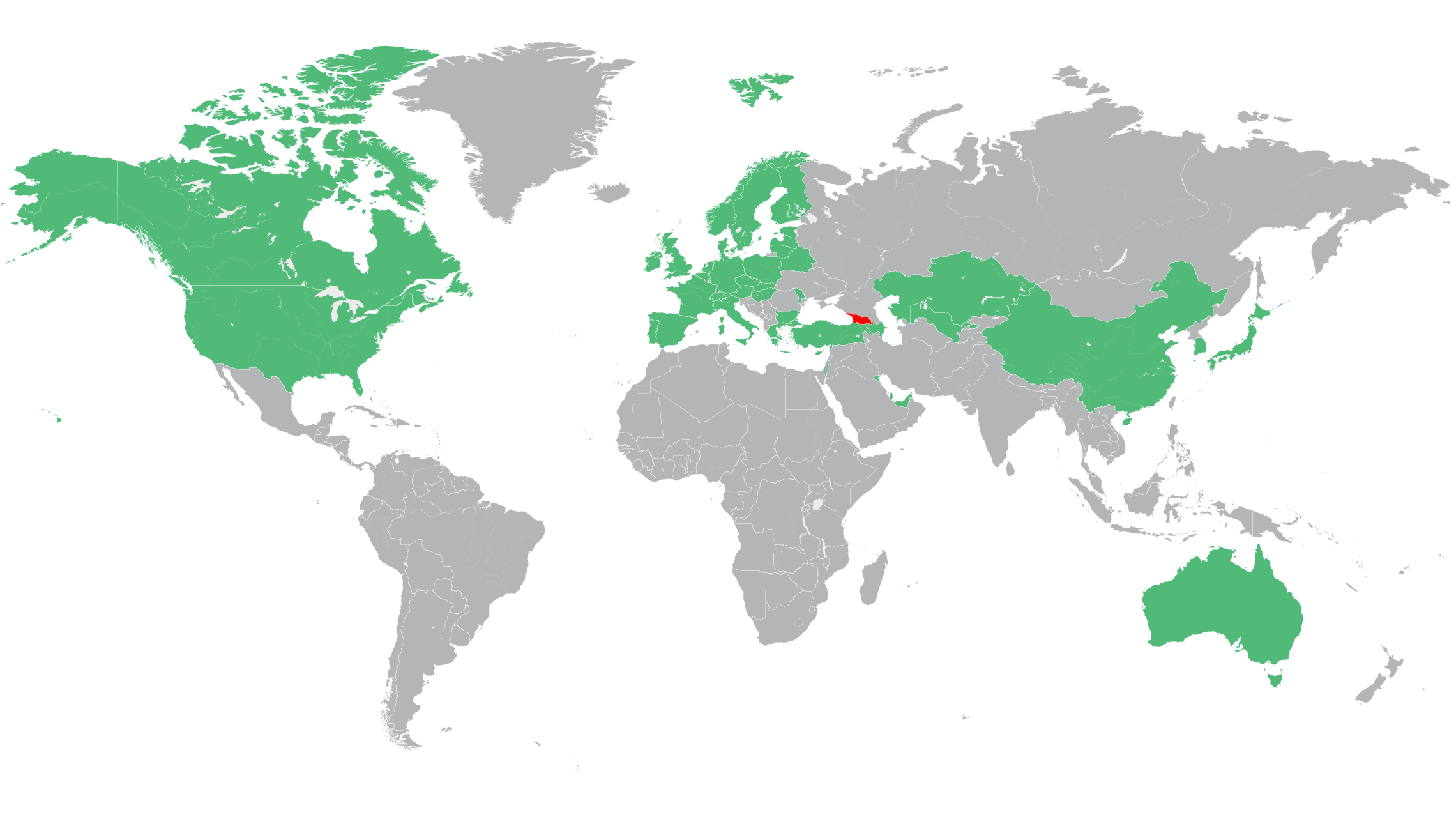
After the deadline for the registration of voters abroad, the central election commission announced on 10 October a total of 95,834 eligible voters had been registered abroad.126CESKO, 10 October 2024, Information On Participation Of Voters Living Abroad In Upcoming Elections As result of the additional 30,000 voters compared to the earlier released number, the election commission decided to open seven more precincts abroad, bringing the total number to 67. These were in cities where it already had created precincts: New York, Berlin, Barcelona, Rome, Athens, Thessaloniki and Paris.
Despite calls by the diaspora and president Salome Zurabishvili to open a precinct in the French city Strasbourg,127Sakartvelos Ambebi – Georgian News, 11 October 2024, President Urges CEC to Establish Polling Station in Strasbourg where Georgia maintains a diplomatic mission, the election commission declined this request.128IPN, 12 October 202, Chairman of the CEC on the request to open a polling station in Strasbourg: the institution is guided by the information provided by the Ministry of Foreign Affairs and not on the basis of the president or any other institution4
6.4 Gender quotas and due process election code
Georgian Dream adopted amendments to the election code in April 2024, abolishing the mandatory quota for women. Under the rule at least one out of every four persons on a party list should be of a different gender than the majority. This ensured at least 25% of the candidates would be female, also in the top part of the list. The amendments to abolish the quota were introduced by opposition party Girchi and supported by the ruling party, after the two parties agreed on the appointment of the chair of the central election commission CESKO. Girchi leader Iago Khvichia said the abolition of gender quota was “morally important”.129Radio Tavisupleba RFE/RL, 1 April 2024, „გირჩი” და „ოცნება“ პარტიულ სიაში ქალთა კვოტირების გაუქმებაზე შეთანხმდნენ In May the presidential veto on the amendment was overruled.
On 25 June and 1 July 2024, both the Council of Europe Venice Commission and the OSCE/ODIHR released an opinion on the amendments stating they are “not consistent” with Georgia’s constitutional and international obligations to eliminate inequality.130Civil Georgia, 1 July 2024, OSCE/ODIHR: Abolition of Women’s Quotas on Party Election Lists “Not Consistent” with Georgia’s Obligations131Civil Georgia, 25 June 2024, Venice Commission Opinion on Abolishing Quotas on Women MPs Both organizations said the step represented a setback for the advancement of gender equality in Georgia and urged for the introduction of alternative measures to stimulate women’s political representation in Georgia. The Venice Commission raised “serious concerns regarding the stability of electoral law” as the amendments were adopted less than a year prior to the elections. Other changes to the electoral code adopted in the same period included allowing so-called “delegates”, party candidates in electoral districts, which some see as a semi-return to the majoritarian system.
Changes to the election code also touched the functioning of the Central Election Commission. Among other things, its advisory group was abolished. The group consists of a representative of the Public Defender as well as the national and international experts selected by observer organizations and is tasked with making recommendations to the CEC regarding the dispute review process. Also, the decision making process in the CEC was modified for situations in which a two-third majority of its full membership is required. If such a decision cannot be passed during a CEC meeting, a revote in the same meeting with a simple majority of the full membership would be enough to pass.132Civil Georgia, 30 May 2024, Parliament Adopts Amendments to Election Code
The Venice Commission criticized the lack of a “broadly consensual and inclusive process”, which, combined with the timeline and dismissal of international recommendations, undermines public confidence in the elections.133Civil Georgia, 25 June 2024, Venice Commission Critical in Follow-Up Opinion on Amendments to Electoral Code
7. Parties
A total of 18 parties finalized their registration for the elections and have been accepted by the CESKO election commission to be on the ballot. During the registration process, 27 parties were accepted and 11 parties were rejected/refused for administrative reasons. Of the 27 accepted parties, 19 submitted a candidate list. The remaining parties either had their registration withdrawn (as they became part of a coalition) or they simply did not submit a list by the deadline. The candidate list of one party was refused as it contained errors that were not fixed in time – hence 18 parties are on the ballot. All this is elaborated in the following paragraph.
7.1 Alliances
The 2020 elections had a one time 1 percent threshold, but the reintroduction of the 5 percent threshold for 2024 forced many opposition parties in parliament to join forces to increase their chances to get re-elected in Parliament. In 2020, only two parties, ruling Georgian Dream and the main opposition force UNM, would have passed the 5% threshold, indicating the need for the majority of parties to unite.
With the ban on electoral blocs (unified candidate lists) in place, a range of opposition parties has grouped together and registered common party entities at the Central Election Commission CESKO. In practice, this was not very different compared to previous elections, except that candidates of third parties cannot be on the list in name of their original party. They would have to become either a party member of the list-bearer or a non-partisan candidate (independent, not a member of any party).
In the past small opposition parties united around the largest opposition force United National Movement (UNM), but in 2024 the opposition followed a strategy of multiple groupings to offer a variety of choices to voters. This served especially those who disenfranchised from the ruling Georgian Dream, while also finding UNM unacceptable.
Various alliances between parties have been formed throughout the summer of 2024. An overview.
-
- Georgian Dream was planning to run independently, but decided to take up their own anti-western (proxy) spinoff People’s Power on a common list.134The Messenger, 17 July 2024, Georgian Dream and People’s Power Announce Joint Participation in Parliamentary Elections People’s Power was responsible for floating the foreign agent law in 2022 and anti-LGBTI legislation, while also being a testing ground for the most wild conspiracy theories about the west, Ukraine and the so called “Global War Party”.
- United National Movement and Strategy Aghmashenebeli joined forces in 2023 under the name “Unity“.135Open Caucasus Media, 21 July 2023, Georgia’s UNM and Strategy Aghmashenebeli to run joint election list Upon presentation of the “Unity – to Save Georgia” platform on 8 July 2024, various independents were introduced as part of the coalition.136Civil Georgia, 8 July 2024, UNM, Strategy Aghmashenebeli Announce Political Platform: ‘Unity – to Save Georgia’ On 17 August 2024 European Georgia joined the coalition, after a part of the party split away over strong disagreements about leadership elections.137IPN, 1 August 2024, Giga Bokeria leaves “European Georgia” Other parties that would fit the political profile of this bloc decided to form other alliances. The extra-parliamentary party ‘Progress and Freedom‘ had several members on the candidate list, of which party leader Kakha Okriashvili was elected.
- Lelo for Georgia, For the People and the newly found Freedom Square formed the alliance “Strong Georgia” (SG).138Civil Georgia, 17 July 2024, Three More Opposition Groups Join Forces Ahead of Crucial Elections Citizens joined the coalition in August 2024, after initial hesitation.139Open Caucasus Media, 24 July 2024, Aleko Elisashvili’s Citizens Party ‘in negotiations’ with growing Georgian opposition alliance Lelo was elected in Parliament in 2020 (formed in 2019) and gained momentum during the campaign period, according to polls.
- Girchi-More Freedom, Droa and the new Akhali (“new”) party have grouped under the name “Coalition for Change“.140Civil Georgia, 9 July 2024, Ahali, Girchi-More Freedom and Droa Unite Ahead of Polls The Republican Party of Georgia joined the coalition on 18 August 2024. Akhali was founded in March 2024 by former UNM leader Nika Melia and Nika Gvaramia (former UNM justice minister, former head of both Rustavi2 and Mtavari tv-channels). Akhali seemed to have taken a chunk of the UNM supporters, according to polls.
- Alliance of Patriots and Alt-Info united forces for the elections.141Open Caucasus Media, 11 June 2024, Georgia’s Alt Info to run in elections with Alliance of Patriots The election authorities revoked the party registration of the “Conservative Movement”, the party vehicle of the far-right, ultra-conservative and pro-Russian Alt-Info. A like minded marginal party, “Georgian Idea”, offered their registration to Alt-Info but the authorities revoked that party license as well. Alt-Info was responsible for many anti-LGBTI attacks in recent years and ran a TV-station geared to their agenda and was considered a radical extension of Georgian Dream. The two allegedly fell out in 2023, with Georgian Dream’s own radical-conservative shift in play, dismissing the need for Alt-Info.
7.2 Single party entities
-
- For Georgia voiced avances to Lelo for Georgia, which did not return the flirts.142IPN, 20 June 2024, ქართული პრესის მიმოხილვა 20.06.2024 For Georgia, led by former Georgian Dream prime minister Giorgi Gakharia, then decided to take part in the elections independently. The polls suggested they could be right about that.143Radio Free Europe, 25 July 2024, Never Mind Unseating Georgian Dream, Georgia’s Opposition Must First Overcome Internal Frictions After a negative ruling by an international arbitration court over Anaklia port, against the plaintiffs, Lelo leader Mamuka Khazaradze, For Georgia leaders “grilled” the Lelo leader, effectively putting any potential coalition to an end,144IPN, 30 July 2024, Beka Liluashvili: The international arbitration court put an end to the Anaklia port case – Mamuka Khazaradze lost the dispute, it will be difficult for him, but he will have to admit it even though the president performed a last ditch attempt in September to get the two parties to an agreement.
- Girchi, the original one founded in 2016, has indicated to take part independently.
- Labour Party did not seek an alliance to run with.
- The election registration of the European Socialists, a rebrand of the faction of the Alliance of Patriots, was cancelled in early August by the election authorities (see below in Registered parties foldout).
7.3 Registered parties
On 30 August 2024 the registration of parties (“election subjects”) at CESKO was closed and finalized.145CESKO, 1 September 2024, The Registration Of Parties For The October 26 Parliamentary Elections In The CEC Has Been Completed In total 27 parties were registered and accepted by CESKO for the elections. Two weeks earlier, the sequence (or list) numbers of the eligible election subjects were announced by CESKO.146CESKO, Elections Sequence Numbers Of Election Subjects The numbers were based on both the applications of parties and their requests for numbers as well as a lottery based system for those which did not submit a request for a number.
Parties elected in Parliament in 2020 were automatically eligible to take part in the elections, pending a confirmation statement to be submitted to the election authorities CESKO on the 57th day before the elections at the latest. This concerned 13 so-called “election subjects” (parties).147CESKO, Election Subjects – Information On Registration Procedures For Parties Participating In The Parliamentary Elections Of Georgia Of these 13, ten completed their registration for the elections. Three parties did not submit their confirmation statement: Republican Party of Georgia (list #11), Progress and Freedom (#18) and Law and Justice (#22). The Republicans are part of the “Coalition for Change” alliance and chose to not finalize their registration.
Some of the 27 registered parties became part of alliances and would therefore not submit their own candidate list and would therefore eventually drop out from the ballot as well. This applied to Strategy Builder (list #1), European Georgia (#2), Citizens (#7), For the People (#48).
Registered parties
Ultimately, after the party registration and the submission of valid candidate lists, a total of 18 parties were registered for the elections. The following tabel shows them ordered by their election number. The last column gives the number of the candidates on the ballot, with the link to the full list.
| Registered parties for the elections | ||||||
|---|---|---|---|---|---|---|
| # | Party | Leader | Remark / Candidates | |||
| 3 | Georgian Unity and Development Party „საქართველოს ერთობისა და განვითარების პარტია“ |
Kamal Muradkhanovi | 31 148CESKO, 7 October 2024, Candidate list Georgian Unity and Development Party (pdf) | |||
| 4 | Coalition for Change Gvaramia Melia Girchi Droa * კოალიცია ცვლილებისთვის გვარამია მელია გირჩი დროა |
Nika Melia | Formerly “Movement – State for the People” „საქართველოს ევროპელი დემოკრატები“. Registration taken over by Akhali (“New”).149Rebranded as “New Unity Gvaramia Melia” after Akhali took over the registration of State for the People. See timeline 19 July 2024. Lead party of “Coalition for Change” alliance. |
82150CESKO, 8 October 2024, Candidate list New Unity Gvaramia Melia (pdf) | ||
| 5 | Unity – National Movement * „ერთიანი ნაციონალური მოძრაობა“ |
Tinatin Bokuchava | Lead party of “Unity” alliance | 97151CESKO, 8 October 2024, Candidate list Unity – National Movement (pdf) | ||
| 6 | European Democrats * „საქართველოს ევროპელი დემოკრატები“ |
Paata Davitaia | 32152CESKO, 1 October 2024, Candidate list European Democrats (pdf) | |||
| 8 | Alliance of Patriots of Georgia * „საქართველოს პატრიოტთა ალიანსი“ |
Davit Tarkhan-Mouravi | 77153CESKO, 1 October 2024, Candidate list Alliance of Patriots of Georgia (pdf) | |||
| 9 | Lelo for Georgia * „ლელო საქართველოსთვის“ |
Mamuka Khazaradze | Name changed to “Strong Georgia: Lelo, for the people, for freedom!” on 29 August 2024.154Radio Tavisupleba, 28 August 2024, ამ არჩევნებისთვის „ლელომ“ სახელი გადაირქვა Lead party of “Strong Georgia” alliance. | 104155CESKO, 4 October 2024, Candidate list Strong Georgia (pdf) | ||
| 10 | Labour Party of Georgia საქართველოს ლეიბორისტული პარტია |
Shalva Natelashvili | 71156CESKO, 7 October 2024, Candidate list Labour Party of Georgia (pdf) | |||
| 12 | Our United Georgia „ჩვენი გაერთიანებული საქართველო“ |
Isaki Giorgadze | 31157CESKO, 5 October 2024, Candidate list Our United Georgia (pdf) | |||
| 16 | Change Georgia „შეცვალე საქართველო“ |
Giorgi Gagnidze | 82158CESKO, 4 October 2024, Candidate list Change Georgia (pdf) | |||
| 17 | Sakartvelo (or “Georgia”) „საქართველო“ |
Giorgi Liluashvili | 49159CESKO, 5 October 2024, Candidate list Sakartvelo (“Georgia”) (pdf) | |||
| 20 | Free Georgia თავისუფალი საქართველო |
Kakha Kukava | 30160CESKO, 7 October 2024, Candidate list Free Georgia (pdf) | |||
| 21 | Tribuna ტრიბუნა |
Davit Chichinadze | 60161CESKO, 7 October 2024, Candidate list Tribuna (pdf) | |||
| 23 | Chven (“Us”) ჩვენ |
Davit Katsarava162Registered as party chairman, but left the party ahead of the elections. | Former registration of “Free Choice – New Alternative” led by Giorgi Pataridze. | 41163CESKO, 8 October 2024, Candidate list Chven (pdf)164Revised list after nine candidates withdrew on 7 October 2024. | ||
| 25 | Gakharia for Georgia „გახარია საქართველოსთვის“ |
Giorgi Gakharia | 115165CESKO, 1 October 2024, Candidate list Gakharia for Georgia (pdf) | |||
| 26 | Left Alliance „მემარცხენე ალიანსი“ |
Konstantine Gugushvili | 34166CESKO, 1 October 2024, Candidate list Left Alliance (pdf) | |||
| 27 | Georgian Unity ქართველ ერთობა |
Gaioz Mamaladze | 44167CESKO, 5 October 2024, Candidate list Georgian Unity (pdf) | |||
| 36 | New Political Center – “Girchi” * „ახალი პოლიტიკური ცენტრი“ – “გირჩი“ |
Iago Khvichia | 36168CESKO, 1 October 2024, Candidate list Girchi (pdf) | |||
| 41 | Georgian Dream – Democratic Georgia * „ქართული ოცნება – დემოკრატიული საქართველო“ |
Irakli Garibashvili | 169169CESKO, 1 October 2024, Candidate list Georgian Dream (pdf) | |||
| * Automatically eligible parties, based on parliamentary representation. Source: CESKO Registry electoral subjects:170CESKO, Election Subjects; Final registration of parties.171CESKO, October 2024, Registered Election Subjects for the October 26, 2024 Parliamentary Elections (pdf); Election Code:172Legislative Herald of Georgia, Election Code of Georgia, consolidated version 26 June 2024 |
||||||
7.4 Rejected parties
The registration of 20 parties were either refused at the registration stage (11) or canceled during the submission of candidate lists (9). By August 2024, the registration of eleven parties was rejected on various grounds. The lack of enough supportive signatures before the stipulated deadline was the most common reason for rejection of the registration. On 29 August 2024, CESKO explained the rejection of three parties.173IPN, 29 August 2024, ცესკო განმარტავს, რატომ ეთქვა უარი არჩევნებში რეგისტრაციაზე ფრიდონ ინჯიას, შოთა შალელაშვილის და აკაკი ასათიანის პარტიებს
They rejected the registration of the European Socialists, even though the party had MPs in parliament, which would automatically qualify a party and dismiss it from the requirement to collect 25,000 signatures before 1 August. However, the deputies of the European Socialists were originally elected as members of the Alliance of Patriots. Henceforth, that party was automatically qualified and the European Socialists had to submit signatures which they failed to do. The Traditionalists also failed to submit signatures, while “Generations for Georgia” submitted the required number of signatures in time, but some were considered invalid. As a result, the election authorities counted less than 25,000 signatures. The party appealed to the court beyond the deadline for it, as a result of which the protest was not considered.
Upon registration of the candidate lists by 26 September 2024, three parties volunteered to withdraw their election registration based on election code article 113, clause 12a (Citizens, For the People and the Green Party). Five other parties were taken out of the registration after they did not submit a candidate list – some of which were part of unified coalitions (Strategy and European Georgia). The candidate list of the Social Democratic Party was refused as it contained errors that were not fixed in time – hence it was also cancelled from the election registration.
Rejected, refused or cancelled registration of parties
| Refused or cancelled election subjects | |||
|---|---|---|---|
| # | Party | Leader | Reason174Reasons of refusal or cancellation of the registration as per Election Code article 38 or 113 and subsequent clauses (#). See footer for the link to the Election Code. |
| 1 | Freedom-Zviad Gamsakhurdia’s Way „თავისუფლება-ზვიად გამსახურდიას გზა“ |
Malkhazi Gorgaslidze | Art. 113, # 2 |
| 2 | Development Party of Georgia „საქართველოს განვითარების პარტია“ |
Ketevan Gogoladze | Art. 113, # 10 |
| 3 | European Socialists „ევროპელი სოციალისტები“ |
Fridon Injia | Art. 113, #9 and #10 |
| 4 | People’s Party სახალხო პარტია |
Ivane (Mamuka) Giorgadze | Art. 113, #9 and #10 |
| 5 | National Democratic Party NDP ეროვნულ-დემოკრატიული პარტია ედპ |
Zurab Ghongadze | Art. 113, #9 and #10 |
| 6 | Traditionalists „ტრადიციონალისტები“ |
Akaki Asatiani | Art. 113, #9 and #10 |
| 7 | United Communist Party of Georgia საქართველოს ერთიანი კომუნისტური პარტია |
Teimuraz Samnidze | Art. 113, #10 |
| 8 | Homeland, Language, Faith „მამული, ენა, სარწმუნოება“ |
Zaur Khachidze | Art. 38, #2 |
| 9 | Winning – For United Georgia „გამარჯვება – ერთიანი საქართველოსთვის“ |
Irakli Torua | Art. 113, #10 |
| 10 | Generations for Georgia თაობები საქართველოსთვის |
Shota Shalelashvili | Art. 38, #2 |
| 11 | Whites თეთრები |
Teimuraz Shashiashvili | Art. 38, #2 |
| Withdrawn or cancelled registration by October 2024 | |||
| 12 | Citizens (#7) 175Part of “Strong Georgia” alliance (#9) „ალეკო ელისაშვილი – მოქალაქეები“ |
Aleko Elisashvili | Art. 113, #12a |
| 13 | Ana Dolidze – For the People (#48) 176Part of “Strong Georgia” alliance (#9) „ანა დოლიძე-ხალხისთვის“ |
Ana Dolidze | Art. 113, #12a |
| 14 | Green Party of Georgia (#24) „საქართველოს მწვანეთა პარტია“ |
Giorgi Gachechiladze | Art. 113, #12a |
| 15 | Third Way (#14) „მესამე გზა“ |
Giorgi Tumanishvili | Art. 113, #12e |
| 16 | For Justice (#15) სამართლიანობისთვის |
Eka Beselia | Art. 113, #12e |
| 17 | Alliance of Democrats (#19) „დემოკრატთა ალიანსი“ |
Giorgi Buchukuri | Art. 113, #12e |
| 18 | European Georgia – Movement for Liberty (#2)177Part of “Unity” alliance (#5). „ევროპული საქართველო – მოძრაობა თავისუფლებისთვის“ |
Giorgi Tsereteli | Art. 113, #12e |
| 19 | Giorgi Vashadze – Strategy Aghmashenebli (#1)178Part of “Unity” alliance (#5); Actual registration changed to ‘Yes to Europe – Strategy Aghmashenebeli’. „გიორგი ვაშაძე – სტრატეგია აღმაშენებელი“ |
Giorgi Vashadze | Art. 113, #12e |
| 20 | Social Democratic Party of Georgia (#13) საქართველოს სოციალ-დემოკრატიული პარტია |
Avtandil Veltauri | Art. 113, #12e |
| Source: CESKO Rejected parties – August 2024:179CESKO, Election Subjects Which Were Given Refusal To Be Registered/Their Registration Was Cancelled (pdf), 16 August 2024; Final list of Cancelled/Rejected parties – October 2024:180CESKO, 8 October 2024, Election Subjects Which Were Given Refusal To Be Registered/Their Registration Was Cancelled – English (pdf)181CESKO, 8 October 2024, Election Subjects Which Were Given Refusal To Be Registered/Their Registration Was Cancelled – Georgian (pdf) Election Code:182Legislative Herald of Georgia, Election Code of Georgia, consolidated version 26 June 2024 | |||
8. Polling
Just like in other election cycles in Georgia, a large discrepancy can be seen between government affiliated surveys (Tbilisi based GORBI, ordered by Imedi TV) versus other polls (Edison, ISSA and Savanta – mostly ordered by government critical media). The most striking difference is the systematically high polling of Georgian Dream by GORBI of around 60%, which Georgian Dream claimed since January 2024 as evidence that the constitutional majority is within arms’ reach. GORBI also systematically claims only one or two opposition parties will manage to pass the 5% threshold. Other polling agencies rate Georgian Dream around 32-34%, while at least four opposition forces got double digit support, enough for a majority together, with two other opposition parties hovering around the threshold (Girchi NPC and Labour). In 2024, the discrepancy between GORBI and Edison is larger than during previous election campaigns.183Civil Georgia, 9 October 2024, October Elections: Odds, Context, Past Trends
Since coming to power in 2012, when Georgian Dream received 55% of the vote, the party didn’t receive more than 50% in parliamentary elections,184Radio Tavisupleba, 15 August 2024, “ოცნების” წინასწარი რეიტინგები და ცდომილებები შედეგებში making the recent claims by the GORBI polls unlikely – especially taking into account the political situation in Georgia and the wide rejection of Georgian Dream’s political path away from the West. In local elections Georgian Dream received 50.8% (2014), 55.8% (2017) and 46.7% (2021) respectively. Experts and the opposition consider the GORBI polls “fairy tales”, and say it is impossible given the current situation the party would reach 50%, let alone 60%. Georgian Dream and its affiliated pollster have a trackrecord of overestimating support for GD. Shortly before the 2020 elections, Bidzina Ivanishvili estimated the support between 54 and 63%, while the party in reality officially received 48% of the vote – which was disputed by the opposition as fraudulent.185Agenda, 8 October 2020, GD chairman Ivanishvili: ‘I condemn all forms of violence undermining electoral process, quality of democracy’
8.1 ISSA
In two ISSA polls in April and June 2024, ordered by the Civil Society Foundation, in which timespan the foreign agent law was adopted, support for Georgian Dream dropped from 45.6% to 34.4%, with UNM increasing from 13.6% to16.9%. The Akhali party, founded in April and missing the first ISSA poll, received 12.4% support in the June poll. Other opposition parties improved their rating as well, with Lelo (8%), For Georgia (6.9%) and Girchi-MF/Droa (5.1%) all passing the threshold according to the poll in June 2024.186PolitPro, Georgia: All election polls at a glance
Giga Bokeria, leader of European Georgia, published the various scenario’s for opposition alliances that were surveyed by ISSA.187Facebook Giga Bokeria, 8 July 2024 He argued the opposition should have multiple centers of gravity instead of a single united alliance centred around UNM.


8.2 Edison
A Formula TV commissioned Edison poll, held between 11 and 24 July 2024, showed a further decrease of support for Georgian Dream to 32.4%, while Unity polled at 17.3%.188Formula TV, 28 July 2024, როგორია პარტიების რეიტინგი – Edison Research-ის კვლევა Other pro-western opposition parties and blocs also reached the double digits according to the poll. Strong Georgia received 12.8% and For Georgia 11.2%, which seems to indicate their strategy to remain independent pays off. The Coalition for Change polled at 9.9%. The libertarian oriented and culturally conservative Girchi (NPC) seemed to gain traction at 5.2%. Other parties remained below the 5% threshold: Labour Party 3.3%, Alliance of Patriots/Alt Info 2.6%, Citizens 2.2% and European Georgia 1.9% – the latter two would join one of the coalitions in August. According to the poll 72% made up their mind who to vote for, which is higher than in previous elections at this stage.
In September and October 2024, three consecutive Edison polls (1-15 September, 10-22 September and 1-18 October) confirmed the pattern of the earlier ISSA and Edison polls and dismissed the GORBI polls. According to Edison, Georgian Dream has 32-34% support,189JAM News, 28 September 2024, Edison Research’s pre-election survey in Georgia: “Dream” at 32% and “National Movement” at 20%190Formula TV, 23 October 2024, როგორია პარტიების რეიტინგი – Edison Research-ის კვლევა 1-18 ოქტომბერი while some shifts took place between the various opposition coalitions – partially due to additional parties joining the coalitions since the Edison poll of July 2024. Also, 71% of the respondents said another party should be given a chance (to govern).191JAM News, 20 September 2024, Georgia elections: 71% Support giving another party a chance’


A few notable developments compared to the July poll of Edison: The Unity – National Movement alliance got 20% support in the first of three polls, a plus of 2.7%, likely due to European Georgia joining the coalition, but fell down in later polls to 18% – still with distance the second largest force. Strong Georgia, which polled 12.8% in July, did not seem to have capitalized on Citizens joining the coalition in August – which was good for 2.2% in the July polls. In the latter three polls Strong Georgia hovered between 10-12%.
Labour Party however, increased their polling with 1.7% and hovers around the 5% threshold. Secondly, Coalition for Georgia polled higher than previously, at the same level as For Georgia, which remains stable around 11-12%. In October, Coalition for Change improved their support in the Edison poll to 14%. For a small party, Girchi (NPC) fluctuates around the threshold between the latter three Edison polls. The Alliance of Patriots saw a small boost to roughly 3% – which is within the margin of error. Lastly, a new entry in the polls around 1% is Chven, led by Power in Unity anti-occupation activist Davit Katsarava. They dropped from the October poll, after Katsarava and a handful other leading figures suddenly left the party.
In the second half of September 2024, Edison mapped the voting behaviour along the gender and generational divides. The gender split showed that women vote significantly more (social-)liberal than men, who prefer socially conservative parties such as Georgian Dream (8% difference), Alliance of Patriots (4%) and Girchi NPC (4%).
As for the generational divide, Georgian Dream is least popular among the youngest voters till 24 year (14%). Among young voters GD is the fourth popular party, behind Unity, Coalition for Change and For Georgia that all polled 20%. Also, the socially conservative and libertarian oriented Girchi NPC is significantly more popular among young voters than among older voters. Noteworthy is also the generational exchange between For Georgia and Georgian Dream – as if they are communicating vessels. Georgian Dream’s popularity has a linear increment with age, being most popular among 65+ year old citizens (46%), far above the overall average of 33%.
8.3 GORBI
In March 2024, GORBI polled 60.4 percent support for Georgian Dream, while UNM/Strategy Builder could count on 12.6% support according to the poll. None of the other parties received more than 5% support, with Lelo (4.7%) and European Georgia (4.5%) being closest.192Imedi, 10 April 2024, GORBI poll shows if parliamentary elections were held this week, Georgian Dream party would receive 60.4% of votes
In early August 2024, GORBI claimed GD has 59.3 percent support, followed by the UNM centered Unity coalition (13.1%), Lelo centered Strong Georgia coalition (5.8%) and Akhali centered Coalition for Change (5.5%). According to the poll other parties would not pass the 5% barrier, with For Georgia (4.8%) just missing out within the margin of error. In this scenario Georgian Dream would secure 107 seats, six short of the constitutional majority of 75% the party aspires to.193Imedi, 14 August 2024, GORBI poll shows if parliamentary elections were held this week, Georgian Dream party would receive 59.3% of votes Prime Minister and GD campaign leader Irakli Kobakhidze said the gap would easily be bridged by “maximum mobilization of voters” and conducting the “right campaign”. The poll still considered European Georgia as a separate election subject, polling at 2.2%. Later in August the party joined the Unity alliance.


Another GORBI poll six weeks later, in the second half of September, showed a similar pattern with GD remaining stable at 59.5% and a few shifts between the opposition: Strong Georgia fell below the threshold, while Coalition for Change was polled in the double digits at 10.3%. Other parties fell short of the 5%.194Imedi, 8 October 2024, GORBI poll shows if parliamentary elections were held this week, Georgian Dream party would receive 59.5% of votes The last GORBI poll, held between 12-21 October 2024, claimed 60.2% support for the ruling party, while Unity/UNM polled at 15.4% and Coalition for Change at 9.0%. According to GORBI, other parties would remain well below the 5% threshold.195Imedi, 23 October 2024, GORBI poll shows if parliamentary elections were held tomorrow, Georgian Dream party would receive 60.2% of votes
8.4 Savanta
In September and October 2024, two polls were held by the British survey agency Savanta, ordered by Mtavari TV.196Mtavari, 23 October 2024, ბრიტანული კომპანია SAVANTA-ს გამოკითხვა | კვლევის შედეგები სრულად Both polls gave the advantage to Coalition for Change as second largest party over Unity/UNM – which other polls, including GORBI, systematically polled as second most popular. The support for Georgian Dream was similar to the Edison and ISSA polls, 35-36%. Coalition for Change Co-founder Nika Gvaramia of Coalition for Change is also the co-founder and director of Mtavari TV.


9. Appendix
1. Full election summary
The complete list of the election results for all participating parties, ordered by their list number (ballot order).
| Party name & list number | Votes | % | ||||
|---|---|---|---|---|---|---|
| 3 | Georgian Unity and Development Party | 3,892 | 0.19 | |||
| 4 | Coalition for Change | 229,161 | 11.03 | |||
| 5 | Unity-National Movement | 211,216 | 10.17 | |||
| 6 | European Democrats | 7,955 | 0.38 | |||
| 8 | Alliance of Patriots of Georgia | 50,599 | 2.44 | |||
| 9 | Strong Georgia | 182,922 | 8.81 | |||
| 10 | Georgian Labour Party | 15,103 | 0.73 | |||
| 12 | Our United Georgia | 1,845 | 0.09 | |||
| 16 | Change Georgia | 12,528 | 0.60 | |||
| 17 | Sakartvelo (“Georgia”) | 2,780 | 0.13 | |||
| 20 | Free Georgia | 4,145 | 0.20 | |||
| 21 | Tribuna | 2,483 | 0.12 | |||
| 23 | Chven (“Us”) | 2,593 | 0.12 | |||
| 25 | Gakharia for Georgia | 161,521 | 7.78 | |||
| 26 | Left Alliance | 1,260 | 0.06 | |||
| 27 | Georgian Unity | 4,500 | 0.22 | |||
| 36 | Girchi – New Political Center | 62,223 | 3.00 | |||
| 41 | Georgian Dream | 1,120,053 | 53.93 | |||
| Total | 2,076,779 | 98.34 | ||||
| Invalid ballots197This is the number on the official protocol of 16 November 2024. The sum of the invalid ballot count as stated on the 73 district protocols and the 67 protocols from abroad is 34,976. This excludes 1,643 votes declared invalid from precinct 22.69 (Marneuli). This precinct was prematurely closed on election day due to irregularities. All cast ballots until that moment were declared invalid. However, there was a slight discrepancy of typically a few ballots between the invalid ballot count noted on the majority of the district protocols and the actual sum (cast ballot total minus valid party votes). According to that sum, the total invalid / missing would have been 35,001 ballots. | 34,974 | 1.66 | ||||
| Total cast votes198CESKO reported a total of 2,111,834 votes. The actual sum of the reported votes per party and invalid votes as released by CESKO is 2,111,753, thus 81 votes short of the reported total cast votes (turnout). | 2,111,834 | 100.00 | ||||
| Registered voters and turnout | 3,508,294 | 60.2 | ||||
| Source: CESKO Final Protocol 2024 elections;199CESKO, Summary Protocol Of the Final Results of the 26 October 2024 Parliamentary Elections of Georgia (pdf) Election dashboard;200Dashboard election results | ||||||
2. Elected members of Parliament
The following table lists all elected MPs as announced by the official election results of the central election commission CESKO and is a snapshot only. Changes such as early terminations of mandates have been noted with a remark. Their replacements are listed a separate table below. The MPs are ordered by their position on the party-list – with the number just representing their index here and not their number on the list. The mandates of 49 opposition MPs were terminated on 5 February 2025, without a replacement due to withdrawn party-lists (see section Boycott).
Note: many MPs are listed below as NP (‘non-partisan’), in line with their formal listing on the party-list as registered by CESKO. These were candidates were either not affiliated to any party or affiliated to a coalition party. In the case of the latter their original party has been mentioned. As explained at the party registration rules, this election did not allow for the formal registration of alliances, with candidates from all alliance parties listed on the unified candidate list by their original party. To provide insight in the background of these MPs and the division of MPs among the coalition blocs their original party membership has been indicated. Georgian Dream named thirty of their candidates as “regional delegates“, reflecting the district division of the 2020 elections, in order to “maintain the connection between voters and candidates”. They have been indicated in this list with an R.
| National constituency party-list MPs | ||||||
|---|---|---|---|---|---|---|
| MP | Party-list | |||||
| Georgian Dream (89) | ||||||
| 1 | Ivanishvili, Bidzina | Mandate terminated on 10 Dec 2024.201IPN, 10 December 2024, ბიძინა ივანიშვილს, ირაკლი ღარიბაშვილს, მიხეილ ყაველაშვილს, ირაკლი კობახიძეს, მაკა ბოჭორიშვილს, ანრი ოხანაშვილს, დავით სონღულაშვილსა და მარიამ ქვრივიშვილს დეპუტატის უფლებამოსილება შეუწყდათ | ||||
| 2 | Kobakhidze, Irakli | Mandate terminated on 10 Dec 2024. Appointed as Prime Minister. | ||||
| 3 | Gharibashvili, Irakli | Mandate terminated on 10 Dec 2024. | ||||
| 4 | Papuashvili, Shalva | |||||
| 5 | Mdinaradze, Mamuka | Mandate terminated on 3 September 2025. Appointed as head of State Security Service | ||||
| 6 | ♀ | Tsulukiani, Tea | ||||
| 7 | Talakhadze, Lasha | |||||
| 8 | Turtsava, Vakhtang | |||||
| 9 | ♀ | Bochorishvili, Maka | Mandate terminated on 10 Dec 2024. Appointed as Minister of Foreign Affairs. | |||
| 10 | Petriashvili, Geno | |||||
| 11 | Subari, Sozar | NP | People’s Power | |||
| 12 | ♀ | Kvrivishvili, Mariam | Mandate terminated on 10 Dec 2024. Appointed as Deputy Minister of Economy and Sustainable Development. | |||
| 13 | Okhanashvili, Anri | Mandate terminated on 10 Dec 2024. Appointed as Minister of Justice. | ||||
| 14 | Samkharadze, Nikoloz | |||||
| 15 | ♀ | Chichinadze, Eka | ||||
| 16 | Berekashvili, Shota | |||||
| 17 | Makhashvili, Levan | |||||
| 18 | Kavelashvili, Mikheil | NP | People’s Power | Mandate terminated on 10 Dec 2024. Presidential nominee. | ||
| 19 | Gabunia, Giorgi | |||||
| 20 | ♀ | Shartava, Lika | ||||
| 21 | Aladashvili, Akaki | R | ||||
| 22 | Beridze, Archil | R | ||||
| 23 | Bolkvadze, Anzor | R | ||||
| 24 | Bozhadze, Vladimer | R | Left GD faction on 23 June 2025 for ‘European Socialists’ opposition group, replacing Varlam Liparteliani (see below).202IPN, 23 June 2025, პარლამენტში შექმნილი პოლიტიკური ჯგუფის „ევროპელი სოციალისტების“ შემადგენლობაში ცვლილებები განხორციელდა | |||
| 25 | Dargali, Zaur | R | ||||
| 26 | Dugladze, Zaal | R | ||||
| 27 | Elisashvili, Nika | R | Left GD faction on 5 Feb 2025 for ‘European Socialists’ opposition group.203Radio Tavisupleba RFE/RL, 5 February 2025, “ქართულ ოცნებას” სამი “ოპოზიციონერი” გამოეყო | |||
| 28 | Enukidze, Gocha | R | ||||
| 29 | Volski, Giorgi | R | ||||
| 30 | Injia, Ilia | R | Left GD faction on 5 Feb 2025 for ‘European Socialists’ opposition group. | |||
| 31 | Kacharava, David | R/NP | People’s Power | Left GD faction on 13 Dec 2024 for ‘People’s Power’ opposition group.204IPN, 13 December 2024, People’s Power leaves the parliamentary majority and joins the opposition | ||
| 32 | Kvizhinadze, Paata | R | ||||
| 33 | Kodua, Dato | R | Mandate terminated 29 October 2025, became mayor of Zugdidi.205IPN, 29 October 2025 , პარლამენტში დავით კოდუას ადგილმონაცვლედ ზურაბ ქადაგიძე შედის | |||
| 34 | Liparteliani, Varlam | R | Left GD faction on 5 Feb 2025 for ‘European Socialists’ opposition group. Returned to GD on 23 June 2025. | |||
| 35 | Lominadze, Zaza | R | ||||
| 36 | Manukian, Samvel | R | ||||
| 37 | Obolashvili, Anton | R | ||||
| 38 | Rurua, Zurab | R | ||||
| 39 | Songhulashvili, David | R | Mandate terminated on 10 Dec 2024. Appointed as Minister of Environmental Protection and Agriculture. | |||
| 40 | Kadagishvili, Irakli | R | ||||
| 41 | Shalamzeridze, Zviad | R | ||||
| 42 | Shatakishvili, Irakli | R | ||||
| 43 | Sherazadishvili, David | R | ||||
| 44 | Chigogidze, Vasil | R | ||||
| 45 | Chichinadze, Givi | R | ||||
| 46 | Chkonia, Giorgi | R | ||||
| 47 | Khakhubia, Giorgi | |||||
| 48 | Kheladze, Irakli | R | ||||
| 49 | Khinchegashvili, Vladimer | R | ||||
| 50 | Khundadze, Dimitri | NP/R | People’s Power | Left GD faction on 13 Dec 2024 for ‘People’s Power’ opposition group. | ||
| 51 | Macharashvili, Guram | NP | People’s Power | Left GD faction on 13 Dec 2024 for ‘People’s Power’ opposition group. | ||
| 52 | Beraia, Irakli | NP | People’s Power | Left GD faction on 13 Dec 2024 for ‘People’s Power’ opposition group. Mandate terminated on 5 Feb 2025,206Civil Georgia, 5 February 2025, GD Terminates Mandates of 49 Opposition MPs, Stages New Parliamentary Group Formation appointed as deputy minister of Justice207IPN, 13 January 2025, Irakli Beraia has been appointed as Deputy Minister of Justice |
||
| 53 | ♀ | Sepashvili, Eka | NP | People’s Power | Left GD faction on 13 Dec 2024 for ‘People’s Power’ opposition group. | |
| 54 | Mikeladze, Zaal | NP | People’s Power | Left GD faction on 13 Dec 2024 for ‘People’s Power’ opposition group. | ||
| 55 | Japaridze, Viktor | NP | People’s Power | Left GD faction on 13 Dec 2024 for ‘People’s Power’ opposition group. | ||
| 56 | Kakhiani, Giorgi | |||||
| 57 | ♀ | Bitadze, Maia | ||||
| 58 | Sanikidze, Viktor | |||||
| 59 | ♀ | Lashkhi, Mariam | ||||
| 60 | Samkharadze, Dimitri | |||||
| 61 | ♀ | Tsilosani, Nino | ||||
| 62 | Ionatamishvili, Rati | |||||
| 63 | Matikashvili, David | |||||
| 64 | Kakhadze, Vladimer | |||||
| 65 | Mezurnishvili, Irakli | |||||
| 66 | Mirzoev, Savalan | |||||
| 67 | ♀ | Beradze, Ramina | ||||
| 68 | Kiuregian, Sumbat | |||||
| 69 | Tabatadze, Aleksandre | |||||
| 70 | Ghudushauri, Aluda | |||||
| 71 | ♀ | Zavradashvili, Irma | ||||
| 72 | Zarkua, Irakli | |||||
| 73 | Mikanadze, Givi | Mandate terminated on 01-07-2025. Appointed as Minister of Education, Science and Youth.208Civil Georgia, 2 July 2025, New MP, Education Committee Chair in GD Parliament | ||||
| 74 | Sosiashvili, Giorgi | |||||
| 75 | Turdzeladze, Nodar | |||||
| 76 | Tsakadze, Bezhan | |||||
| 77 | Dalakishvili, Aleksandre | |||||
| 78 | Daseni, Isko | |||||
| 79 | Toloraia, Edisher | |||||
| 80 | Chankseliani, Goderdzi | |||||
| 81 | Benashvili, Gia | |||||
| 82 | Khabareli, Shota | |||||
| 83 | Samkharauli, Gela | |||||
| 84 | Chakvetadze, Giorgi | |||||
| 85 | Sharmanashvili, Tengiz | |||||
| 86 | Kirtskhalia, Irakli | |||||
| 87 | Barvenashvili, Giorgi | |||||
| 88 | ♀ | Tsitsava, Henrietta | ||||
| 89 | Nikuradze, Imeda | |||||
| Coalition for Change (19)209The coalition was carried on the party registration of Akhali, hence candidates of Akhali were not registered as ‘non-partisan’ (NP). | ||||||
| 90 | ♀ | Malashkhia, Nana | NP | Mandate terminated on 5 Feb 2025210IPN, 5 February 2025, 49 ოპოზიციონერ დეპუტატს სადეპუტატო უფლებამოსილება შეუწყდა – 150-წევრიანი პარლამენტი 101-წევრიანი გახდა | ||
| 91 | Melia, Nika | Akhali | Mandate terminated on 5 Feb 2025 | |||
| 92 | Japaridze, Zurab | NP | Girchi-MF | Mandate terminated on 5 Feb 2025 | ||
| 93 | Lemonjava, Giorgi | NP | Droa | Mandate terminated on 5 Feb 2025 | ||
| 94 | Tevzadze, Tengiz | Akhali | Mandate terminated on 5 Feb 2025 | |||
| 95 | Koberidze, Tsotne | NP | Girchi-MF | Mandate terminated on 5 Feb 2025 | ||
| 96 | Kirtadze, Giorgi | Akhali | Mandate terminated on 5 Feb 2025 | |||
| 97 | Chkonia, Ivane | NP | Mandate terminated on 5 Feb 2025 | |||
| 98 | ♀ | Samnidze, Khatuna | NP | Republican Party | Mandate terminated on 5 Feb 2025 | |
| 99 | Kazumovi, Oktai | NP | Mandate terminated on 5 Feb 2025 | |||
| 100 | ♀ | Kopaleishvili, Maia | Akhali | Mandate terminated on 5 Feb 2025 | ||
| 101 | Kurua, Boris | NP | Girchi-MF | Mandate terminated on 5 Feb 2025 | ||
| 102 | ♀ | Gogoladze, Ana | Akhali | Mandate terminated on 5 Feb 2025 | ||
| 103 | Butikashvili, Giorgi | Akhali | Mandate terminated on 5 Feb 2025 | |||
| 104 | Imedashvili, Giorgi | Akhali | Mandate terminated on 5 Feb 2025 | |||
| 105 | ♀ | Khostaria, Elene | NP | Droa | Mandate terminated on 5 Feb 2025 | |
| 106 | ♀ | Goletiani, Sofia | Akhali | Mandate terminated on 5 Feb 2025 | ||
| 107 | ♀ | Arevadze, Marika | Akhali | Mandate terminated on 5 Feb 2025 | ||
| 108 | ♀ | Kavtaradze, Ani | Akhali | Mandate terminated on 5 Feb 2025 | ||
| Unity – National Movement (16)211The coalition was carried on the party registration of UNM, hence candidates of UNM were not registered as ‘non-partisan’ (NP). | ||||||
| 109 | ♀ | Bokuchava, Tinatin | UNM | Mandate terminated on 5 Feb 2025 | ||
| 110 | Vashadze, Giorgi | NP | Strategy Builder | Mandate terminated on 5 Feb 2025 | ||
| 111 | ♀ | Japaridze, Sopo | UNM | Mandate terminated on 5 Feb 2025 | ||
| 112 | Nakopia, Koba | UNM | Mandate terminated on 5 Feb 2025 | |||
| 113 | Japaridze, Gia (Gaioz) | NP | Mandate terminated on 5 Feb 2025 | |||
| 114 | Tsiskarishvili, Petre | UNM | Mandate terminated on 5 Feb 2025 | |||
| 115 | Tsereteli, Giorgi | NP | European Georgia | Mandate terminated on 5 Feb 2025 | ||
| 116 | Khvadagiani, Irakli | UNM | Mandate terminated on 5 Feb 2025 | |||
| 117 | ♀ | Kordzaia, Tamar | NP | Mandate terminated on 5 Feb 2025. | ||
| 118 | Pavlenishvili, Irakli | UNM | Mandate terminated on 5 Feb 2025. | |||
| 119 | Okriashvili, Kakhaber | NP | Progress and Freedom | Mandate terminated on 5 Feb 2025 | ||
| 120 | Nikolaishvili, Ramaz | NP | Mandate terminated on 5 Feb 2025 | |||
| 121 | ♀ | Kherkheulidze, Eka | UNM | Mandate terminated on 5 Feb 2025 | ||
| 122 | Khabeishvili, Levan | UNM | Mandate terminated on 5 Feb 2025 | |||
| 123 | Bakradze, Lasha | NP | Mandate terminated on 5 Feb 2025 | |||
| 124 | ♀ | Tsitlidze, Ana | UNM | Mandate terminated on 5 Feb 2025 | ||
| Strong Georgia – Lelo, for the people, for freedom! (14)212The coalition was carried on the party registration of Lelo for Georgia, hence candidates of Lelo were not registered as ‘non-partisan’ (NP). | ||||||
| 125 | Khazaradze, Mamuka | Lelo | Mandate terminated on 5 Feb 2025 | |||
| 126 | ♀ | Dolidze, Ana | NP | For the People | Mandate terminated on 5 Feb 2025 | |
| 127 | Japaridze, Badri | Lelo | Mandate terminated on 5 Feb 2025 | |||
| 128 | ♀ | Natsvlishvili, Ana | Lelo | Mandate terminated on 5 Feb 2025 | ||
| 129 | Tsutskiridze, Levan | NP | Freedom Square | Mandate terminated on 5 Feb 2025 | ||
| 130 | Kupradze, Irakli | Lelo | Mandate terminated on 5 Feb 2025 | |||
| 131 | ♀ | Turazashvili, Ketevan | NP | Citizens | Mandate terminated on 5 Feb 2025 | |
| 132 | Buadze, Saba | Lelo | Mandate terminated on 5 Feb 2025 | |||
| 133 | ♀ | Samadashvili, Salome | Lelo | Mandate terminated on 5 Feb 2025 | ||
| 134 | Rakviashvili, Datuna (David) | NP | Mandate terminated on 5 Feb 2025 | |||
| 135 | ♀ | Laliashvili, Tamar | NP | Mandate terminated on 5 Feb 2025 | ||
| 136 | Gegelia, Grigol | Lelo | Mandate terminated on 5 Feb 2025 | |||
| 137 | Samushia, Levan | Lelo | Mandate terminated on 5 Feb 2025 | |||
| 138 | ♀ | Chikhradze, Pikria | Lelo | Mandate terminated on 5 Feb 2025 | ||
| Gakharia for Georgia (12) | ||||||
| 139 | Gakharia, Giorgi | Mandate terminated on 2 July 2025213Civil Georgia, 2 July 2025, Georgian Dream Parliament Terminates 12 Gakharia Party Mandates | ||||
| 140 | ♀ | Mezvrishvili, Natia | Mandate terminated on 2 July 2025 | |||
| 141 | Tskitishvili, Dimitri | Mandate terminated on 2 July 2025 | ||||
| 142 | Kemoklidze, Kakhaber | Mandate terminated on 2 July 2025 | ||||
| 143 | Dzidziguri, Zviad | NP | Conservative Party | Mandate terminated on 2 July 2025 | ||
| 144 | Tavadze, Zaza | Mandate terminated on 2 July 2025 | ||||
| 145 | ♀ | Buchukuri, Ana | Mandate terminated on 2 July 2025 | |||
| 146 | Sichinava, Berdia | Mandate terminated on 2 July 2025 | ||||
| 147 | Kochorashvili, Roini | Mandate terminated on 2 July 2025 | ||||
| 148 | Liluashvili, Beka | Mandate terminated on 2 July 2025 | ||||
| 149 | ♀ | Akubardia, Teona | NP | Mandate terminated on 2 July 2025 | ||
| 150 | Gogichaishvili, Levan | Mandate terminated on 2 July 2025 | ||||
| Sources: Final protocol and elected MPs,214CESKO, Summary Protocol Of the Final Results of the 26 October 2024 Parliamentary Elections of Georgia (pdf) and Parliament website. | ||||||
The following table shows members of Parliament appointed at a later stage during the 11th Convocation, due to early termination of mandates. In brackets behind the name shows the party-list position of the MP (see the list linked at the registered parties table).
| MP | Party-list | |||
|---|---|---|---|---|
| Georgian Dream | ||||
| 1 | Machavariani, Levan (90) | From 10 Dec 2024, replacing Bidzina Ivanishvili.215Netgazeti, 10 December 2024, პაატა სალია, არჩილ გორდულაძე და სხვები – „ოცნებამ“ 8 ახალი დეპუტატის უფლებამოსილება ცნო | ||
| 2 | Gorduladze, Archil (91) | From 10 Dec 2024, replacing Irakli Kobakhidze. | ||
| 3 | ♀ | Jinjolava, Salome (93) | From 10 Dec 2024, replacing Irakli Gharibashvili. | |
| 4 | Berekashvili, Tornike (94) | From 10 Dec 2024, replacing Maka Bochorishvili. | ||
| 5 | Cheishvili, Tornike (95) | From 10 Dec 2024, replacing Mariam Kvrivishvili. | ||
| 6 | Salia, Paata (96) | From 10 Dec 2024, replacing Anri Okhanashvili. Mandate terminated on 16 April 2025; succeeded Okhanashvili as Justice minister.216Civil Georgia, 2 April 2025, GD Cabinet Reshuffled | ||
| 7 | Guguchia, Giorgi (97) | From 10 Dec 2024, replacing Mikheil Kavelashvili. | ||
| 8 | Cheishvili, Irakli (98) | From 10 Dec 2024, replacing Davit Songhulashvili. | ||
| 9 | Abesadze, Grigol (100) | From 6 Feb 2025, replacing Irakli (Dachi) Beraia.217IPN, 6 February 2025, „ქართულ ოცნებას“ პარლამენტში ახალი წევრი ჰყავს – ირაკლი ბერაიას ადგილმონაცვლედ გრიგოლ აბესაძის უფლებამოსილება ცნეს | ||
| 10 | Ioseb Jorbenadze (101) | From 16 April 2025, replacing Paata Salia.218Publika, 16 April 2025, პაატა სალიას ადგილმონაცვლე იოსებ ჯორბენაძე გახდა | ||
| 11 | Davit Dolidze (102) | From 2 July 2025, replacing Givi Mikanadze.219Civil Georgia, 2 July 2025, New MP, Education Committee Chair in GD Parliament | ||
| 12 | Tornike Pagava (103) | From 3 September 2025, replacing Mamuka Mdinaradze.220Publika, 3 September 2025, „ოცნების“ პარლამენტში მდინარაძის ადგილმონაცვლე თორნიკე ფაღავა გახდა |
||
| 13 | Zurab Kadagidze (104) | From 29 October 2025, replacing Davit Kodua.221IPN, 29 October 2025 , პარლამენტში დავით კოდუას ადგილმონაცვლედ ზურაბ ქადაგიძე შედის | ||
| 14 | ||||
| 15 | ||||
| Gakharia for Georgia | ||||
| 1 | Giga Parulava (13) | From 2 September 2025, replacing Giorgi Gakharia222IPN, 2 September 2025, Parliament recognizes mandates of 12 members of Gakharia for Georgia party | ||
| 2 | Shalva Kereselidze (14) | From 2 September 2025, replacing Natia Mezvrishvili | ||
| 3 | Gela Abuladze (15) | From 2 September 2025, replacing Dimitri Tskitishvili | ||
| 4 | ♀ | Tamar Khvedeliani (16) | From 2 September 2025, replacing Kakha Kemoklidze | |
| 5 | ♀ | Vika Pilpani (18) | From 2 September 2025, replacing Zviad Dzidziguri | |
| 6 | ♀ | Sofio Khorguani (20) | From 2 September 2025, replacing Zaza Tavadze | |
| 7 | Jemal Ananidze (21) | From 2 September 2025, replacing Ana Buchukuri | ||
| 8 | ♀ | Rusudan Tevzadze (22) | From 2 September 2025, replacing Berdia Sichinava; Resigned mandate 27 October 2025.223IPN, 27 October 2025, Rusudan Tevzadze announces she is renouncing her parliamentary mandate and leaving the “Gakharia for Georgia” party | |
| 9 | Giorgi Sharashidze (23) | From 2 September 2025, replacing Roin Khochorashvili | ||
| 10 | ♀ | Ketevan Bakaradze (24) | From 2 September 2025, replacing Beka Liluashvili | |
| 11 | Malkhaz Toria (25) | From 2 September 2025, replacing Teona Akubardia | ||
| 12 | ♀ | Salome Kobaladze (28) | From 2 September 2025, replacing Levan Gogichaishvili | |
| 13 | tba | From … November 2025, replacing Rusudan Tevzadze | ||
3. Electoral districts
The following tabel shows the electoral districts with the number of registered voters, actual votes and the turnout – according to the district protocols. Tbilisi was divided in 10 districts. There is a slight discrepancy between the grand totals of this table (based on the district protocols) and the official grand total as reported by CESKO. Noteworthy is the relative high number of invalid ballots in all districts of Adjara (up to 4%) and in multiple districts in Kakheti and Kvemo Kartli (between 2.5 and 3%), well above the average of 1.66%. Especially in Batumi, the 2nd city of the country, this had quite an impact with nearly 3000 votes having been invalidated. In Tbilisi this was well below average.

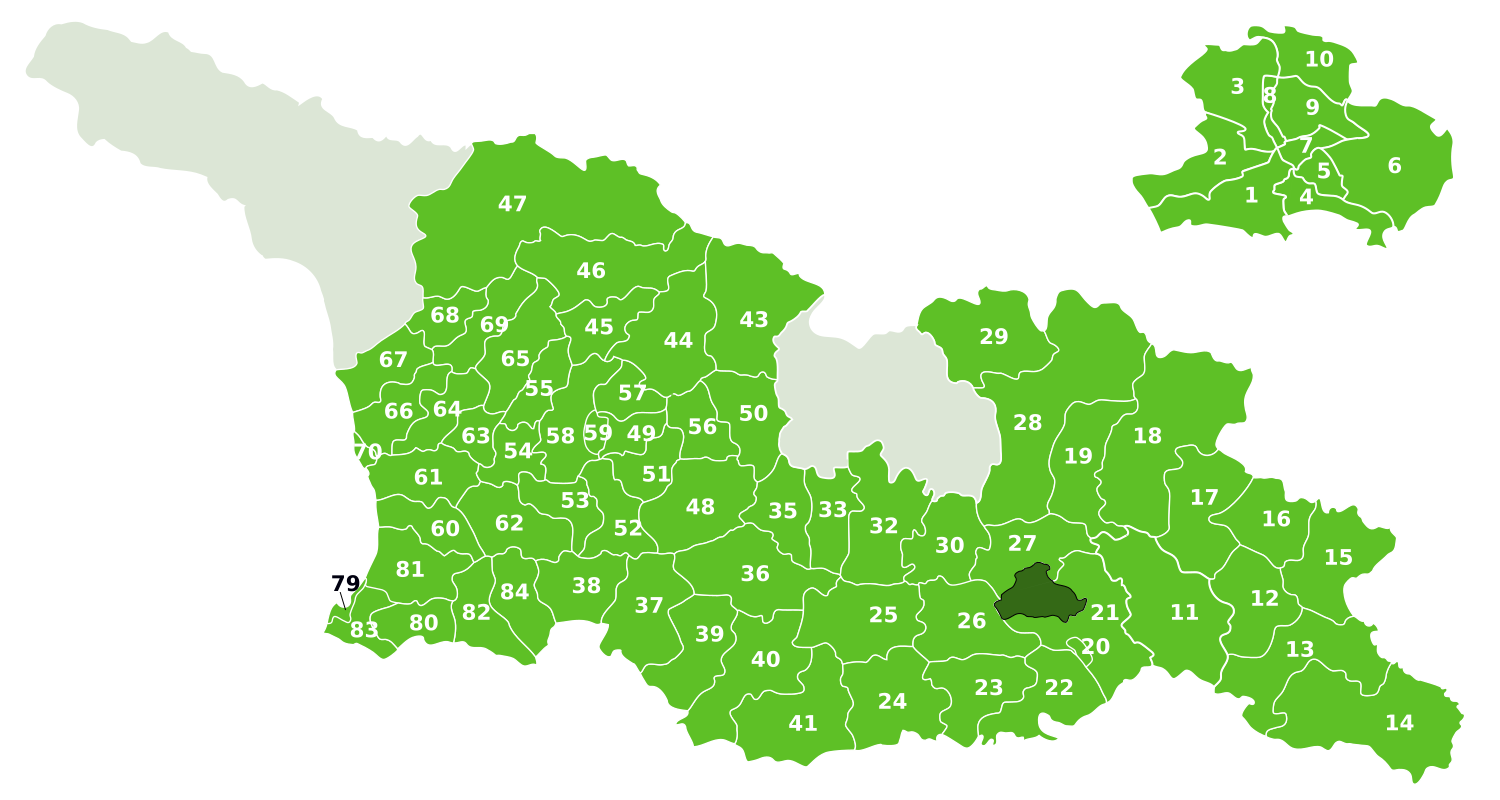
| # | District | Reg. voters |
Cast votes |
Valid votes |
Invalid votes224According to the district protocols. There are some discrepancies between the invalid ballot count noted on the protocol and the delta of cast minus valid party votes. Total discrepancy over all districts is 31 votes on a grand total of 35,011. All cast and party sums match. |
Turnout | ||
|---|---|---|---|---|---|---|---|---|
| 1 | Tbilisi – Mtatsminda | 53540 | 35737 | 35407 | 329 | 0.92% | 66.75% | |
| 2 | Tbilisi – Vake | 110528 | 76984 | 76378 | 606 | 0.79% | 69.65% | |
| 3 | Tbilisi – Saburtalo | 143099 | 96782 | 95919 | 867 | 0.90% | 67.63% | |
| 4 | Tbilisi – Krtsanisi | 42028 | 22880 | 22550 | 330 | 1.44% | 54.44% | |
| 5 | Tbilisi – Isani | 117408 | 64257 | 63529 | 724 | 1.13% | 54.73% | |
| 6 | Tbilisi – Samgori | 150203 | 83431 | 82383 | 1048 | 1.26% | 55.55% | |
| 7 | Tbilisi – Chugureti | 67233 | 41251 | 40806 | 448 | 1.09% | 61.36% | |
| 8 | Tbilisi – Didube | 61717 | 41362 | 40962 | 398 | 0.96% | 67.02% | |
| 9 | Tbilisi – Nadzaladevi | 135315 | 80777 | 79919 | 861 | 1.06% | 50.70% | |
| 10 | Tbilisi – Gldani | 150072 | 87048 | 86016 | 1036 | 1.19% | 58.00% | |
| 11 | Sagarejo | 46471 | 25404 | 24909 | 502 | 1.98% | 54.67% | |
| 12 | Gurjaani | 49850 | 32867 | 32340 | 527 | 1.60% | 65.93% | |
| 13 | Sighnaghi | 27949 | 18360 | 18102 | 256 | 1.39% | 65.69% | |
| 14 | Dedoplistskaro | 20352 | 12717 | 12572 | 144 | 1.13% | 62.49% | |
| 15 | Lagodekhi | 38349 | 21696 | 21130 | 565 | 2.60% | 56.58% | |
| 16 | Kvareli | 27337 | 17653 | 17236 | 418 | 2.37% | 64.58% | |
| 17 | Telavi | 55050 | 33146 | 32668 | 478 | 1.44% | 60.21% | |
| 18 | Akhmeta | 29486 | 15980 | 15600 | 376 | 2.35% | 54.20% | |
| 19 | Tianeti | 10797 | 6622 | 6525 | 97 | 1.46% | 61.33% | |
| 20 | Rustavi | 106310 | 62236 | 61260 | 976 | 1.57% | 58.54% | |
| 21 | Gardabani | 74270 | 33899 | 33025 | 866 | 2.55% | 45.64% | |
| 22 | Marneuli | 101572 | 44415 | 43198 | 1189 | 2.68% | 43.73% | |
| 23 | Bolnisi | 56341 | 26463 | 25578 | 884 | 3.34% | 46.97% | |
| 24 | Dmanisi | 23068 | 12773 | 12411 | 361 | 2.83% | 55.37% | |
| 25 | Tsalka | 19203 | 8978 | 8791 | 187 | 2.08% | 46.75% | |
| 26 | Tetritskaro | 20017 | 12032 | 11823 | 207 | 1.72% | 60.11% | |
| 27 | Mtskheta | 44995 | 29617 | 29156 | 457 | 1,54% | 65.82% | |
| 28 | Dusheti | 27226 | 15311 | 15096 | 216 | 1.41% | 56.24% | |
| 29 | Kazbegi | 5811 | 3518 | 3470 | 48 | 1.36% | 60.54% | |
| 30 | Kaspi | 38973 | 23021 | 22642 | 384 | 1.67% | 59.07% | |
| 32 | Gori | 111656 | 66877 | 65944 | 928 | 1.39% | 59.90% | |
| 33 | Kareli | 37212 | 23328 | 22887 | 442 | 1.89% | 62.69% | |
| 35 | Khashuri | 47874 | 28640 | 28281 | 360 | 1.26% | 59.82% | |
| 36 | Borjomi | 26643 | 16213 | 16004 | 209 | 1.26% | 60.85% | |
| 37 | Akhaltsikhe | 33535 | 21572 | 21294 | 278 | 1.29% | 64.33% | |
| 38 | Adigeni | 15418 | 10754 | 10588 | 169 | 1.57% | 69.75% | |
| 39 | Aspindza | 9771 | 7160 | 7081 | 79 | 1.10% | 73.28% | |
| 40 | Akhalkalaki | 37496 | 21015 | 20718 | 297 | 1.41% | 56.05% | |
| 41 | Ninotsminda | 20724 | 12229 | 12015 | 214 | 1.75% | 59.01% | |
| 43 | Oni | 6967 | 4590 | 4528 | 65 | 1.42% | 65.88% | |
| 44 | Ambrolauri | 11706 | 8235 | 8136 | 98 | 1.19% | 70.35% | |
| 45 | Tsageri | 10430 | 6956 | 6852 | 103 | 1.48% | 66.69% | |
| 46 | Lentekhi | 5795 | 3416 | 3370 | 41 | 1.20% | 58.95% | |
| 47 | Mestia | 8955 | 5427 | 5368 | 59 | 1.09% | 60.60% | |
| 48 | Kharagauli | 18897 | 13498 | 13288 | 209 | 1.55% | 71.43% | |
| 49 | Terjola | 32032 | 20871 | 20425 | 449 | 2.15% | 65.16% | |
| 50 | Sachkhere | 40200 | 27806 | 27487 | 319 | 1.15% | 69.17% | |
| 51 | Zestafoni | 52906 | 32066 | 31512 | 551 | 1.72% | 60.61% | |
| 52 | Baghdadi | 20704 | 12799 | 12595 | 204 | 1.59% | 61.82% | |
| 53 | Vani | 23356 | 14667 | 14383 | 282 | 1.92% | 62.80% | |
| 54 | Samtredia | 43568 | 25269 | 24770 | 500 | 1.98% | 58.00% | |
| 55 | Khoni | 21748 | 14065 | 13716 | 343 | 2.44% | 64.67% | |
| 56 | Chiatura | 40801 | 24052 | 23677 | 372 | 1.55% | 58.95% | |
| 57 | Tkibuli | 20020 | 12342 | 12178 | 164 | 1.33% | 61.65% | |
| 58 | Tskaltubo | 49206 | 28941 | 28524 | 418 | 1.44% | 58.82% | |
| 59 | Kutaisi | 152506 | 81871 | 80692 | 1176 | 1.44% | 53.68% | |
| 60 | Ozurgeti | 58288 | 36709 | 36083 | 623 | 1.70% | 62.98% | |
| 61 | Lanchkhuti | 27254 | 16839 | 16565 | 280 | 1.66% | 61.79% | |
| 62 | Chokhatauri | 17366 | 11887 | 11666 | 217 | 1.83% | 68.45% | |
| 63 | Abasha | 19727 | 12751 | 12533 | 217 | 1.70% | 64.64% | |
| 64 | Senaki | 38161 | 22439 | 22092 | 352 | 1.57% | 58.80% | |
| 65 | Martvili | 30822 | 19972 | 19547 | 413 | 2.07% | 64.80% | |
| 66 | Khobi | 26500 | 16314 | 16024 | 289 | 1.77% | 61.56% | |
| 67 | Zugdidi | 116968 | 55682 | 54741 | 932 | 1.67% | 47.60% | |
| 68 | Tsalenjikha | 27547 | 15276 | 15004 | 272 | 1.78% | 55.45% | |
| 69 | Chkhorotsku | 20829 | 13606 | 13340 | 265 | 1.95% | 65.32% | |
| 70 | Poti | 40512 | 22223 | 21883 | 341 | 1.53% | 54.86% | |
| 79 | Batumi | 154357 | 94701 | 91845 | 2841 | 3.00% | 61.35% | |
| 80 | Keda | 15581 | 11849 | 11451 | 398 | 3.36% | 76.05% | |
| 81 | Kobuleti | 66235 | 41750 | 40471 | 1269 | 3.04% | 63.03% | |
| 82 | Shuakhevi | 14454 | 9828 | 9539 | 290 | 2.95% | 68.00% | |
| 83 | Khelvachauri | 43271 | 28631 | 27397 | 1238 | 4.32% | 66.17% | |
| 84 | Khulo | 23221 | 14927 | 14588 | 341 | 2.28% | 64.28% | |
| 87 | Abroad | 95910 | 34530 | 34296 | 284 | 0.82% | 36.00% | |
| Total225The grand total of registered voters based on the districts and abroad is 3,591,699, but a large number of voters registered abroad are duplicate with domestically registered voters. CESKO reported a grand total of 3,508,294 registered (unique) voters. The sum of invalid ballots is 34,976, but the number on the final protocol is 34,974. | 3,508,294 | 2,111,790 | 2,076,779 | 34,976 | 1.66% | 60.19% | ||
| Sources: CESKO. Definition election districts and precincts;226CESKO, Districts 2024 elections Number of voters per 14 October;227CESKO, 22 October 2024, Number of voters in each election district as of 14 October 2024 Election results data provided by CESKO on 13 November 2024 based on summary protocols.228CESKO, 13 November 2024, არჩევნებში მონაწილეთა რაოდენობა შემაჯამებელი ოქმების მიხედვით გენდერული სტატისტიკა (ქვეყნის მასშტაბით) (pdf) (redundant: number of voters per 15 July229CESKO, 30 August 2024, Number of voters in each election district as of 15 July 2024) | ||||||||
4. Polling stations abroad
Election precincts in foreign countries for the elections of the Georgian Parliament on 26 October 2024, listed per precinct number (#). In total 67 precincts were created in 42 countries. As the regulations stipulated a precinct should have a minimum of 50 and a maximum of 3000 registered voters, in some cities multiple precincts were created. In those cases, the polling stations were on the same address. The result sheet below is based on the precinct protocols. A few discrepancies between the invalid ballots and sums have been noted.
The total turnout was 36%, double compared 2020, but there was a high variation between the countries. Less than 4% in Kazakhstan and 70-80% in smaller diaspora countries. Large diaspora centers in the United States, Germany and United Kingdom were good for the brunt of the turnout at around 50%. However, in Azerbaijan with three precincts in Baku, the turnout was less than 10%. In general, the turnout in the former Soviet area stood low, including in Armenia and Belarus. Also in Greece with seven precincts (nearly 17,500 registered voters), turnout was relatively low at 23.8%.
| # | Country | City | Reg. voters |
Cast votes |
Valid votes |
Invalid votes |
Turnout | |
|---|---|---|---|---|---|---|---|---|
| 1 | Austria | Vienna | 1574 | 756 | 749 | 7 | 48.03% | |
| 2 | Azerbaijan | Baku | 2738 | 292 | 292 | 0 | 10.66% | |
| 3 | 2617 | 154 | 152 | 2 | 5.88% | |||
| 4 | 1941 | 195 | 195 | 0 | 10.05% | |||
| 5 | United States | Washington DC | 1328 | 608 | 603 | 5 | 45.78% | |
| 6 | New York, NY | 2986 | 1548 | 1541 | 7 | 51.84% | ||
| 7 | 2949 | 1418 | 1416 | 2 | 48.08% | |||
| 8 | 2914 | 1391 | 1387 | 4 | 47.74% | |||
| 9 | San Francisco, CA | 859 | 452 | 449 | 3 | 52.62% | ||
| 10 | Belarus | Minsk | 936 | 90 | 89 | 1 | 9.62% | |
| 11 | Belgium | Brussels | 2235 | 887 | 882 | 5 | 39.69% | |
| 12 | Bulgaria | Sofia | 110 | 41 | 41 | 0 | 37.27% | |
| 13 | Germany | Berlin | 1795 | 939 | 936 | 4 | 52.31% | 230Actual difference calculation is 3. |
| 14 | Frankfurt am Main | 2845 | 1383 | 1378 | 5 | 48.61% | ||
| 15 | Munich | 1841 | 1056 | 1053 | 3 | 57.36% | ||
| 16 | Stuttgart | 1201 | 807 | 798 | 9 | 67.19% | ||
| 17 | Denmark | Copenhagen | 147 | 105 | 104 | 1 | 71.43% | |
| 18 | Great Britain | London | 2994 | 1343 | 1339 | 4 | 44.86% | |
| 19 | Spain | Madrid | 2146 | 759 | 756 | 3 | 35.37% | |
| 20 | Barcelona | 1697 | 663 | 656 | 7 | 39.07% | ||
| 21 | Estonia | Tallinn | 329 | 229 | 338 | 1 | 69.60% | |
| 22 | Turkey | Ankara | 633 | 104 | 104 | 0 | 16.43% | |
| 23 | Istanbul | 1794 | 290 | 285 | 5 | 16.16% | ||
| 24 | Trabzon | 792 | 396 | 391 | 5 | 50.00% | ||
| 25 | Ireland | Dublin | 1745 | 624 | 623 | 1 | 35.76% | |
| 26 | Israel | Ramat Gan (Tel Aviv) | 2237 | 733 | 723 | 10 | 32.77% | |
| 27 | Italy | Rome | 1990 | 581 | 580 | 1 | 29.20% | |
| 28 | Bari | 2186 | 802 | 797 | 5 | 36.69% | ||
| 29 | Milan | 2252 | 1067 | 1062 | 12 | 47.38% | 231Actual difference calculation is 5. | |
| 30 | Canada | Ottawa, Ontario | 739 | 264 | 261 | 3 | 35.72% | |
| 31 | Cyprus | Nicosia | 630 | 273 | 271 | 2 | 43.33% | |
| 32 | Latvia | Riga | 187 | 107 | 106 | 1 | 57.22% | |
| 33 | Lithuania | Vilnius | 358 | 256 | 253 | 3 | 71.51% | |
| 34 | Moldova | Chisinau | 101 | 40 | 40 | 0 | 39.60% | |
| 35 | Netherlands | The Hague | 732 | 477 | 477 | 0 | 65.16% | |
| 36 | Poland | Warsaw | 2426 | 1013 | 1005 | 7 | 41.76% | 232Actual difference calculation is 8. |
| 37 | Portugal | Lisbon | 347 | 172 | 172 | 0 | 49.57% | |
| 38 | Greece | Athens | 2834 | 805 | 792 | 10 | 28.41% | 233Actual difference calculation is 13. |
| 39 | 2784 | 754 | 725 | 29 | 27.08% | |||
| 40 | 2851 | 743 | 743 | 8 | 26.06% | 2348 invalid noted on protocol, but the total is equal to the sum of the (valid) party votes. Likely this was erroneously not entered as 751. | ||
| 41 | Thessaloniki | 2039 | 360 | 355 | 5 | 17.66% | ||
| 42 | 2135 | 369 | 362 | 7 | 17.28% | |||
| 43 | France | Paris | 2188 | 662 | 652 | 10 | 30.26% | |
| 44 | Slovakia | Bratislava | 1010 | 218 | 217 | 0 | 21.49% | |
| 45 | Armenia | Yerevan | 919 | 72 | 72 | 0 | 7.83% | |
| 46 | Uzbekistan | Tashkent | 131 | 50 | 50 | 0 | 38.17% | |
| 47 | Hungary | Budapest | 379 | 270 | 267 | 3 | 71.24% | |
| 48 | Kuwait | Al Kuwait | 92 | 50 | 48 | 2 | 54.35% | |
| 49 | Kazakhstan | Astana | 1633 | 59 | 59 | 0 | 3.61% | |
| 50 | Sweden | Stockholm | 1191 | 558 | 553 | 5 | 46.85% | |
| 51 | Switzerland | Bern | 545 | 321 | 320 | 1 | 58.90% | |
| 52 | Czech Republic | Prague | 772 | 477 | 469 | 7 | 61.79% | 235Actual difference calculation is 8. |
| 53 | Qatar | Doha | 124 | 60 | 58 | 2 | 48.39% | |
| 54 | China | Beijing | 119 | 57 | 57 | 0 | 47.90% | |
| 55 | Norway | Oslo | 123 | 89 | 87 | 2 | 72.36% | |
| 56 | United Arab Emirates | Abu Dhabi | 247 | 152 | 152 | 0 | 61.54% | |
| 57 | Finland | Helsinki | 125 | 105 | 104 | 1 | 84.00% | |
| 58 | South Korea | Seoul | 76 | 53 | 53 | 0 | 69.74% | |
| 59 | Japan | Tokyo | 67 | 48 | 46 | 2 | 71.64% | |
| 60 | Australia | Canberra | 109 | 50 | 50 | 0 | 45.87% | |
| 61 | United States | New York | 2974 | 1534 | 1525 | 9 | 51.58% | |
| 62 | Germany | Berlin | 1960 | 1082 | 1079 | 3 | 55.20% | |
| 63 | Spain | Barcelona | 1987 | 849 | 848 | 1 | 42.73% | |
| 64 | Italy | Rome | 1665 | 486 | 485 | 1 | 29.19% | |
| 65 | Greece | Athens | 2790 | 722 | 722 | 35 | 25.88% | 23635 invalid noted on protocol, but the total is equal to the sum of the (valid) party votes. Likely this was erroneously not entered as 757. |
| 66 | Thessaloniki | 2029 | 398 | 393 | 10 | 19.62% | 237Actual difference calculation is 5. | |
| 67 | France | Paris | 2681 | 763 | 759 | 3 | 28.46% | 238Actual difference calculation is 4. |
| Total | 95610 | 34530 | 34296 | 234 | 36.00% | |||
| Sources: CESKO.239CESKO, 26 September 2024, Election precincts in other states for the elections of the Parliament of Georgia on October 26, 2024 (pdf) Updated list:240CESKO, 11 October 2024, საქართველოს პარლამენტის 2024 წლის 26 ოქტომბრის არჩევნებისთვის სხვა სახელმწიფოში საარჩევნო უბნები (pdf); PEC members abroad:241CESKO, 16 October 2024, საქართველოს პარლამენტის 2024 წლის 26 ოქტომბრის არჩევნებისთვის სხვა სახელმწიფოში საარჩევნო უბნების შემადგენლობა (pdf); Protocols election precincts abroad via election dashboard;242CESKO, Dashboard election results | ||||||||